
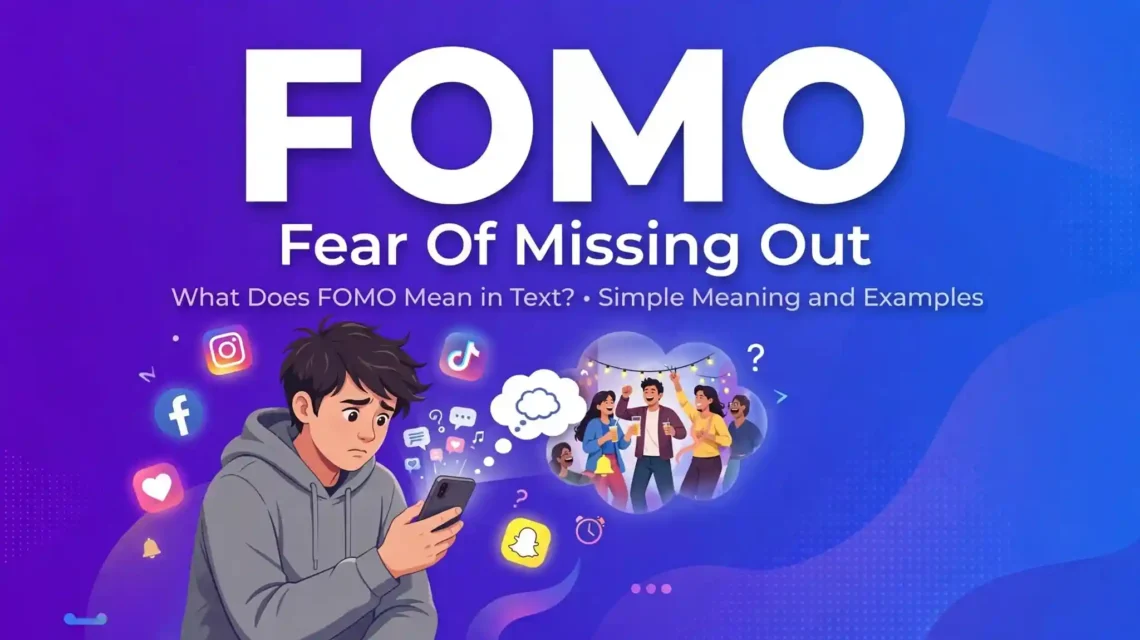
When it comes to understanding modern texting slang, fomo meaning in text can be confusing at first. FOMO is a common internet abbreviation that appears in text messages, social media posts, chats, comments, and online conversations. It usually describes the feeling that you might be missing an exciting, useful, or important experience while other people are enjoying it.
In simple terms, FOMO stands for “fear of missing out.” People often use it when they feel left out or worry that they are missing something happening around them. The phrase can describe serious feelings, but people also use it casually or jokingly.
What Does FOMO Mean in Text?
The basic fomo meaning in text is “fear of missing out.” It describes worry or excitement about being left out of an event, activity, trend, opportunity, or social experience.
FOMO is an abbreviation rather than a traditional texting word. It became popular through online communication and social media. Today, people can use it in both casual conversations and broader discussions about online culture.
For example:
“Everyone is going to the concert tonight. I have serious FOMO.”
Here, the person feels bad because they will not attend the concert.
Another example is:
“I almost stayed home, but FOMO got me out of the house.”
The speaker means that the fear of missing something enjoyable encouraged them to go.
FOMO can refer to many situations, including:
- Missing a party
- Skipping a trip
- Not joining friends
- Missing a sale
- Not trying a popular restaurant
- Missing an online trend
- Not attending a concert
- Missing a professional opportunity
- Being absent from a social event
- Feeling left out of a group activity
FOMO Meaning in Texting: How Is It Used?
In texting, fomo meaning in text usually depends on what the sender feels they might miss. The abbreviation can describe an emotional reaction, a reason for making a decision, or a playful comment.
People often use FOMO in short sentences because the abbreviation is widely understood online.
FOMO as a Feeling
Someone may say they have FOMO when they cannot attend something.
“I can’t go tonight, and now I have FOMO.”
This means the person wishes they could participate.
FOMO as a Reason
FOMO can also explain why someone changed their plans.
“I wasn’t going to go, but I had FOMO.”
The speaker decided to participate because they did not want to miss the experience.
FOMO as a Joke
Sometimes people use FOMO humorously.
“You guys ordered pizza without me? FOMO!”
The person may not actually feel serious anxiety. They are simply joking about being left out.
FOMO About Trends
The term can describe missing a popular trend.
“Everyone has tried that new app except me. FOMO.”
This suggests that the person feels curious or left behind because others are using it.
FOMO About Opportunities
FOMO is not limited to social events.
“I almost skipped the workshop, but I didn’t want FOMO later.”
In this context, the person worries about missing a useful learning or career opportunity.
What Does FOMO Stand For?
FOMO stands for “fear of missing out.”
The abbreviation takes the first letters of the four words:
- F = Fear
- O = Of
- M = Missing
- O = Out
Unlike some texting abbreviations that have existed mainly in online chat, FOMO has also become common in everyday spoken English. People may say “FOMO” aloud as well as type it.
For example, someone might say:
“I have FOMO about that trip.”
The written and spoken forms carry the same basic meaning.
The expression describes more than simply wanting to attend something. It often involves the thought that other people are having an experience that you are missing.
FOMO Meaning in Text With Examples
Examples make the slang easier to understand because the meaning can change slightly with context.
Example 1: Missing a Party
Friend: “We’re all going to Sarah’s party tonight.”
You: “I can’t make it. Major FOMO 😭”
The person feels disappointed about missing the party.
Example 2: Missing a Trip
“Seeing everyone’s vacation photos is giving me FOMO.”
The person wishes they had gone on the vacation.
Example 3: Social Media
“I keep seeing people at that festival. FOMO is real.”
The posts make the person feel that they are missing an enjoyable event.
Example 4: A New Restaurant
Friend: “We tried that new burger place yesterday.”
You: “Without me? FOMO!”
This may be playful rather than serious.
Example 5: Shopping
“The sale ends tonight, and I’m getting FOMO.”
The person worries about missing a good deal.
Example 6: A Career Opportunity
“Everyone is attending the networking event, so I might go too. I don’t want FOMO.”
Here, FOMO relates to a possible professional benefit.
Example 7: Online Gaming
“My friends started the new season without me. FOMO!”
The player feels left behind because their friends are already participating.
Example 8: Staying Home
“I was going to stay in tonight, but now I have FOMO.”
The person changed their plan because they worried they would miss something enjoyable.
How to Tell What FOMO Means From Context
FOMO can have slightly different meanings depending on the situation. Looking at the words around the abbreviation usually makes the intended meaning clear.
Consider these examples:
“FOMO because I skipped the party.”
This clearly describes missing a social event.
“FOMO because everyone bought tickets.”
This may refer to missing an event or opportunity.
“No FOMO. I needed a quiet night.”
Here, the person says they do not feel worried about missing out.
“This video gave me FOMO.”
The video likely showed an experience that made the viewer wish they had been there.
Tone also matters.
A crying emoji, sad emoji, or phrases such as “I wish I could go” can make FOMO sound more emotional.
Laughing emojis or phrases such as “LOL” can show that the person is using the term jokingly.
When someone simply writes:
“FOMO!”
they may expect the other person to understand the situation from the previous messages.
FOMO Meaning in Text and Social Media
Social media has made the concept of FOMO especially common because users can see what other people are doing almost instantly.
A person might open an app and see:
- Friends attending a concert
- Someone traveling
- A group having dinner
- People attending an event
- A new product becoming popular
- Friends playing a game
- Someone sharing exciting news
- A trend that many people are discussing
Seeing these posts can create the impression that everyone else is participating in something enjoyable.
A person might then write:
“Instagram is giving me FOMO today.”
This does not necessarily mean the person has a serious problem. It can simply mean that the posts make them wish they were part of those experiences.
FOMO can also appear in captions and comments:
“Wish I was there. FOMO!”
“Everyone went except me. 😭”
“This trip is giving me serious FOMO.”
The abbreviation works well in social media because it communicates a familiar feeling in only four letters.
Common Situations Where People Use FOMO
FOMO can appear in almost any conversation involving missed experiences or opportunities.
Social Events
Parties, weddings, dinners, birthdays, and gatherings are common examples.
“I couldn’t attend the dinner, so I have FOMO.”
Travel
People may experience FOMO after seeing friends travel.
“Your beach pictures are giving me FOMO.”
Entertainment
Concerts, movies, festivals, sporting events, and shows can trigger the feeling.
“I should have bought tickets. FOMO!”
Shopping
Limited-time offers can create a fear of missing a product or discount.
“Should I buy it now? I’m getting FOMO.”
Technology
People sometimes use FOMO when friends adopt a new phone, application, game, or gadget.
“Everyone is using the new app. FOMO is making me download it.”
School and Work
The term can describe missing meetings, workshops, conferences, or other opportunities.
“I missed the seminar and now I have FOMO.”
Friend Groups
Someone may feel left out when friends make plans without them.
“You all went out without me? FOMO!”
These examples show why context matters. The abbreviation stays the same, but the thing being missed changes.
Is FOMO Positive or Negative?
FOMO can have both positive and negative sides.
The negative side is easier to understand. A person may feel anxious, disappointed, left out, or pressured because they believe other people are having better experiences.
For example:
“I keep checking everyone’s posts because I don’t want to miss anything.”
That behavior can become distracting.
However, FOMO can sometimes encourage useful action. Someone might attend an educational event, reconnect with friends, or try an activity because they do not want to miss an opportunity.
For example:
“I almost skipped the conference, but I decided to attend.”
The person’s concern about missing the event encouraged participation.
Still, the word itself does not automatically indicate whether the situation is good or bad. The surrounding conversation provides the meaning and tone.
Common Mistakes When Using FOMO
Although FOMO is simple, new users sometimes misunderstand how to use it.
Mistake 1: Treating FOMO as “I Want Something”
FOMO is not simply another word for wanting something.
If you say:
“I want a new phone.”
that does not automatically express FOMO.
But:
“Everyone I know has the new phone, and now I feel like I’m missing out.”
does express the idea behind FOMO.
Mistake 2: Using It Without Context
If someone suddenly sends only “FOMO,” the other person may not know what they mean.
FOMO usually works best when the conversation already establishes what is being missed.
Mistake 3: Assuming It Is Always Serious
People often use FOMO jokingly.
Someone might say:
“You ate the last cookie without me? FOMO!”
They may simply be making a playful comment.
Mistake 4: Confusing FOMO With Fear in General
FOMO does not mean fear of anything.
It specifically relates to the concern that you are missing out on something.
Mistake 5: Using FOMO When You Feel Happy About Staying Away
If someone enjoys skipping an event, JOMO may describe the feeling more accurately.
For example:
“Everyone went hiking, but I stayed home and watched movies. Best decision ever.”
That sounds closer to joy from missing out than fear of missing out.
How to Reply When Someone Says “I Have FOMO”
Your response should match the situation and your relationship with the person.
If they genuinely feel left out, you can reassure them:
“Don’t worry. We’ll do something together soon.”
If they missed an event, you could share a few details:
“You definitely missed a fun night, but we’ll invite you next time.”
If they are joking, you can respond playfully:
“Haha, you should have come!”
You can also use FOMO yourself:
“Now I’m getting FOMO too!”
The best response depends on the tone of the original conversation.
Why Is FOMO So Common in Modern Texting?
Texting favors short expressions that communicate ideas quickly. FOMO fits this style because four letters can represent a longer phrase.
It is also easy to combine with other casual language:
- “Major FOMO”
- “FOMO is real”
- “I’m getting FOMO”
- “This gives me FOMO”
- “No FOMO today”
- “FOMO got me”
- “Serious FOMO”
The abbreviation also works well with emojis.
For example:
“Everyone is at the concert 😭 FOMO.”
The emoji adds emotional context without requiring a longer explanation.
Because people communicate across text messages, social networks, gaming platforms, and group chats, short slang terms such as FOMO can move easily between different online spaces.
Tips for Understanding FOMO in a Text Message
When you see FOMO in a conversation, use these steps to understand it quickly:
- Look at the previous message.
It may identify the event or activity the person is discussing. - Find what the person might be missing.
Look for references to parties, trips, purchases, trends, or opportunities. - Check the tone.
Emojis and punctuation can show whether the person is serious or joking. - Consider the relationship.
Friends may use FOMO playfully, while a professional conversation may use it more literally. - Look for phrases around it.
Words such as “wish,” “miss,” “everyone,” and “should have gone” can provide clues. - Do not assume the emotion is intense.
In casual texting, FOMO often simply means “I wish I could have been there.”
These steps can help you understand the intended meaning without overthinking the abbreviation.
Frequently Asked Questions About FOMO Meaning in Text
What does FOMO mean in a text message?
FOMO means “fear of missing out.” In text messages, people use it when they feel that they are missing an enjoyable event, activity, trend, or opportunity that other people are experiencing.
Is FOMO slang?
Yes. FOMO is a widely used informal abbreviation and internet slang term. People commonly use it in text messages, social media, online chats, and casual speech.
What does “I have FOMO” mean?
“I have FOMO” means the person feels worried, disappointed, or curious because they are missing something that other people are doing or experiencing.
Can FOMO be used as a joke?
Yes. FOMO often appears in humorous conversations. A person might jokingly complain about missing dinner, a game, or a small social activity.
What is the opposite of FOMO?
JOMO, or “joy of missing out,” is commonly used as the opposite idea. It describes feeling content or happy about choosing not to participate.
Is FOMO only related to social media?
No. FOMO can occur in everyday life. People may experience it around social events, travel, shopping, entertainment, school, work, hobbies, and many other activities.
Conclusion
Understanding fomo meaning in text is simple once you know what the four letters represent: “fear of missing out.” The expression describes a feeling that you may be missing an enjoyable, interesting, useful, or important experience while other people take part.
In texting, FOMO can sound serious, casual, or humorous. Someone may use it after missing a party, seeing friends travel, skipping an event, noticing a popular trend, or deciding not to buy something. The surrounding conversation usually tells you what the person feels they are missing.