
When it comes to online conversations, slang can change the meaning of a simple word. The word “dub” is a good example. You may see it in text messages, gaming chats, TikTok comments, or everyday conversations. In modern slang, people often use it to describe a win, a success, or a positive result. However, the word has other meanings in different settings. This guide explains the dub meaning slang, where it comes from, how people use it, and how to reply when someone says it. You will also learn the difference between “dub” and “L” through clear examples.
What Does dub meaning slang?
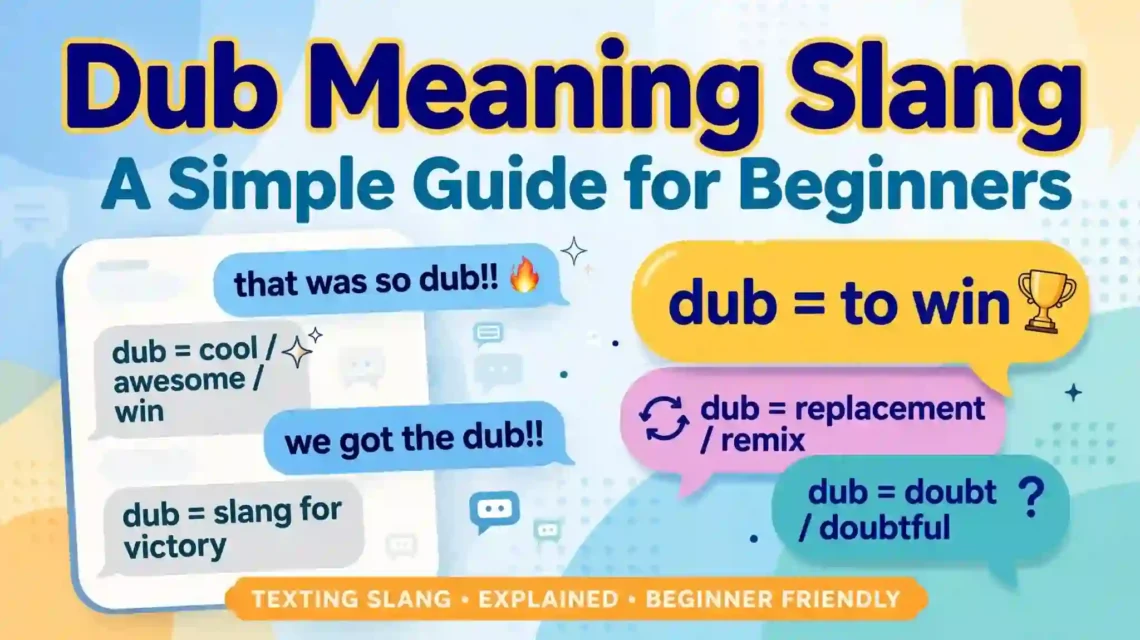
In modern slang, “dub” usually means a win, victory, or successful result. People use it to celebrate something good or show that an outcome went their way.
For example, someone might text, “We got the tickets for half price. That’s a dub!” They mean the deal was a success. A person may also say, “You passed your exam? Big dub!” This shows excitement and approval.
The word often appears in casual conversations. Friends use it when they win a game, get good news, find a great deal, or achieve a goal. It can describe a small success or a major achievement.
Here are a few simple meanings:
- Win: You beat someone in a game or competition.
- Success: Something worked out well.
- Good result: You received a positive outcome.
- Positive choice: You made a smart or useful decision.
- Approval: You think something deserves praise.
The exact meaning depends on the conversation. In most casual online chats, however, “dub” carries a positive tone.
Why Do People Use the Word Dub?
People use short slang words because they make conversations quick and expressive. “Dub” offers an easy way to celebrate a good result without writing a long response.
Imagine your friend tells you that they got a new job. You could reply, “That’s a huge dub!” Your message sounds friendly and excited. It also shows that you support their success.
The word works well because it fits many situations. You can use it for sports, school, work, shopping, gaming, and personal achievements. It also adds a playful tone to a conversation.
People may write it in different ways:
- “Dub!”
- “That’s a dub.”
- “Huge dub.”
- “Easy dub.”
- “Another dub.”
- “We take those dubs.”
These phrases all express a positive reaction. Some sound more excited than others, but they share the same general idea.
Dub Meaning Slang in Text Messages
The dub meaning slang in text messages usually points to a win or a good outcome. Friends often use it to react to news, celebrate achievements, or praise someone’s choices.
Text messages do not provide facial expressions or voice tone. Slang helps people show emotion with fewer words. When someone replies “dub,” they usually mean that something went well.
Consider these examples:
Example 1
- Person A: “I found my lost wallet!”
- Person B: “That’s a dub!”
The second person celebrates the good news.
Example 2
- Person A: “The teacher moved the test to next week.”
- Person B: “Big dub for us.”
The reply shows relief and excitement.
Example 3
- Person A: “I got the last seat on the bus.”
- Person B: “Huge dub.”
The person sees this small event as a lucky result.
Example 4
- Person A: “I finished my project before the deadline.”
- Person B: “That’s a personal dub.”
The reply praises the achievement.
Example 5
- Person A: “We won the final match!”
- Person B: “Another dub for the team!”
Here, the word celebrates a sports victory.
Common Texting Phrases With Dub
You may see “dub” in several short phrases. Each one adds a slightly different feeling.
- Big dub: A major win or an impressive result.
- Huge dub: A very successful outcome.
- Easy dub: A win that felt simple or effortless.
- Clean dub: A clear or satisfying victory.
- Free dub: A win that came with little effort.
- W dub: A positive result or a winning moment.
- Dub for me: Something that benefits the speaker.
- That’s a dub: A direct way to praise an outcome.
These phrases appear in casual chats and online comments. Their meaning stays close to success, approval, and positive results.
How to Use Dub in Everyday Conversations
You can use “dub” in many informal situations. The best time to use it is when someone shares a success or when you want to describe a positive outcome.
The word sounds natural in relaxed conversations. It may not fit formal emails, business reports, or serious discussions. Keep your audience in mind before using it.
Using Dub With Friends
Friends often use slang to keep conversations fun. “Dub” can make a quick reply sound more energetic.
Examples:
- “Getting Friday off work is a dub.”
- “You found a great restaurant? That’s a dub.”
- “We got front-row seats. Huge dub!”
- “Your favorite song is playing? That’s a dub.”
- “You saved money on the order. Nice dub.”
You can also use it to praise a friend’s decision. For example, “Choosing the cheaper phone was a smart dub.” This means the choice worked out well.
Using Dub at School or Work
The word can describe achievements in school or work. Use it with people who understand casual slang.
Examples:
- “Finishing the assignment early was a dub.”
- “We got an extra day to complete the project. Big dub.”
- “You scored the highest mark? That’s a huge dub.”
- “The meeting ended early. That’s a win.”
- “Getting the promotion is a major dub.”
In a professional setting, choose clearer language when speaking with clients or managers. “Success,” “good result,” and “positive outcome” sound more suitable in formal communication.
Using Dub in Gaming
Gaming is one of the places where people often celebrate wins with short expressions. Players may use “dub” after winning a match, completing a challenge, or beating another team.
Examples:
- “We got the dub!”
- “That was an easy dub.”
- “One more match, one more dub.”
- “Our team earned a clean dub.”
- “You carried the whole match. Big dub!”
A player may also say “W” instead of “dub.” Both can express victory or approval in gaming chats.
Dub Meaning Slang on Social Media
On social media, people use “dub” in comments, captions, and replies. It often appears under posts about achievements, exciting news, giveaways, sports results, and personal milestones.
A creator might share a video about finding a rare item. A viewer could comment, “That’s a dub!” Someone who wins a giveaway may post, “First dub of the year.” These messages celebrate good fortune or success.
The word also appears in short captions. For example:
- “Weekend plans secured. Big dub.”
- “Passed the driving test. W.”
- “New job, new chapter, huge dub.”
- “Found my favorite shoes on sale. Dub!”
- “A peaceful day is always a dub.”
What Does dub meaning slang on TikTok?
On TikTok, “dub” often appears in video comments and captions. Users may write it when they agree with a choice, enjoy a result, or think someone has done something impressive.
For example, a video about a student passing an exam may receive comments such as “Huge dub” or “W student.” A clip showing a clever money-saving tip may also attract the same response.
The word does not have a special TikTok-only definition. Its common meaning remains a win or positive outcome. The video topic helps you understand what the person celebrates.
What Does dub meaning slang on Snapchat and Instagram?
On Snapchat and Instagram, people may use “dub” in direct messages, story replies, and comments. A friend could send a photo of a new purchase and receive the reply, “That’s a dub.”
Someone might post a story about getting concert tickets. Their friend could respond, “Big dub!” The message means the event is exciting or the result is good.
The platform does not change the basic meaning. The word remains casual slang for a win, success, or positive choice.
Dub Meaning Slang vs. L: What Is the Difference?
“Dub” and “L” often appear together in online conversations. They express opposite reactions. A dub means a win or success, while an L means a loss, mistake, or disappointing result.
People use both words to react quickly. You may see them in sports discussions, gaming chats, memes, and everyday messages.
| Slang | Meaning | Example |
| Dub | Win or success | “We got the dub!” |
| L | Loss or failure | “That was a huge L.” |
| W | Win or positive result | “W choice!” |
| L take | Bad opinion | “That’s an L take.” |
| Big dub | Major success | “Getting the job was a big dub.” |
| Big L | Major disappointment | “Missing the flight was a big L.” |
When Should You Use dub meaning slang Instead of L?
Use “dub” when something goes well. Use “L” when something goes badly or creates disappointment.
Here are some comparisons:
- You win a football match: “That’s a dub.”
- You lose a football match: “That’s an L.”
- You find a cheap flight: “Big dub.”
- You miss the flight: “Big L.”
- You pass an exam: “Huge dub.”
- You forget to study and fail: “That’s an L.”
People sometimes use these words humorously. A small mistake may become a “massive L” among friends. A simple success may become a “huge dub.” The tone can make the words playful rather than serious.
Other Meanings of the Word Dub
The word “dub” does not always mean a win. It has several meanings in English. The context helps you identify the intended meaning.
Dub as a Nickname
In some informal settings, people use “dub” as a nickname. It may come from a person’s name, initials, or a personal habit. This use depends on the individual or group.
For example, someone named William might have a nickname that sounds like “Dub.” You should not assume that every person using the word means a victory.
Dub meaning slang in Movies and Television
In film and television, a dub refers to replacing the original spoken dialogue with recorded voices in another language. This helps viewers enjoy content in a language they understand.
For example, a Japanese animated film may receive an English dub. Actors record new dialogue, and editors match it to the scenes. In this context, “dub” has nothing to do with winning.
Dub meaning slang in Music
Dub is also a music style linked to reggae. It often uses strong bass, drums, echo, and other studio effects. Producers may remix existing recordings to create a different sound.
You may hear the term in music discussions, album descriptions, or artist interviews. The meaning is different from the slang used in texting.
Dub meaning slang as a Verb
In standard English, “to dub” can mean to give someone a title or name. For example, a writer might say, “The fans dubbed him the king of comedy.”
It can also describe adding a new soundtrack or voice recording to a film. These meanings show why context matters when you see the word.
Common Mistakes to Avoid When Using Dub
Slang can make conversations more natural, but using it in the wrong setting may cause confusion. Learn these simple points before adding the word to your messages.
- Do not use it in every situation: A serious problem may need a thoughtful response instead of “dub.”
- Do not confuse it with L: A dub is positive, while an L usually describes a negative result.
- Do not assume one meaning everywhere: Movies, music, and nicknames use the word differently.
- Do not force it into formal writing: Use standard words such as “success” or “achievement” in professional documents.
- Do not use it when the meaning is unclear: Read the full message before replying.
- Do not mistake it for a full sentence: “Dub” is often a short reaction. It may need more context to explain what happened.
A good rule is to match your language to the conversation. If your friends use casual slang, “dub” may fit naturally. If you are speaking with someone unfamiliar with online expressions, choose a clearer phrase.
How to Reply When Someone Says Dub
Your reply depends on what the other person celebrates. You can agree, show excitement, or ask a question if you do not understand the situation.
Here are some natural replies:
- “For real! That was a big win.”
- “We love to see it!”
- “Absolutely. Everything worked out.”
- “Another win for us!”
- “You earned that one.”
- “That’s what I’m talking about!”
- “A well-deserved dub.”
- “Couldn’t agree more.”
- “Let’s go!”
- “What a result!”
If someone says “That’s a dub” about your achievement, you can reply, “Thanks! I worked hard for it.” If they celebrate a shared success, try, “We did it!”
You can also ask what they mean. For example, “Do you mean that as a win?” This is useful when you are new to the expression or the context is unclear.
Frequently Asked Questions
Does dub meaning slang win in texting?
Yes. In casual texting, “dub” usually means a win, success, or positive result. People use it to celebrate good news, praise a decision, or describe something that worked out well.
What does W mean compared with dub?
“W” stands for win and carries a similar meaning to “dub.” People use both words to show approval or celebrate success. “W” is often used as a short comment, while “dub” can also appear in phrases such as “get the dub.”
Is dub a positive or negative word?
In modern slang, “dub” usually has a positive meaning. It describes a victory, achievement, or good result. The word can have other meanings in music and entertainment, so the context still matters.
What does getting the dub meaning slang?
“Getting the dub” means winning. A gamer may say it after winning a match. Friends may also use the phrase after a successful plan, a competition, or a good outcome.
Can I use dub meaning slang in a professional conversation?
You can use it with coworkers who enjoy casual language, but it may sound too informal in official communication. Words such as “success,” “win,” and “positive result” work better in formal settings.
Conclusion
The word “dub” is a popular way to describe a win, success, or positive result in casual conversations. You may see it in text messages, gaming chats, social media comments, and everyday discussions. Phrases such as “big dub,” “easy dub,” and “get the dub” all express a sense of achievement or approval.
Remember that context matters. The same word can refer to a movie soundtrack, a music style, or a nickname. In texting, however, it usually carries a positive meaning. It also works as the opposite of “L,” which people use to describe a loss or disappointment.
Understanding the dub meaning slang makes online conversations easier to follow. Use it with friends, celebrate good news, and keep your audience in mind. You do not need to use every slang term you learn. Choose the expressions that feel natural and fit the moment.