
When it comes to texting and social media, short forms can make conversations faster but also harder to understand. One common abbreviation people may see in chats, comments, and direct messages is WTV. If you have received a message containing this term, you may wonder what it means and how you should respond. The wtv meaning in text is usually simple: “whatever.” However, the exact tone can change based on the conversation, the person using it, and the words around it. In this guide, you will learn what WTV means, where it comes from, how people use it, what it can imply, and how to reply naturally in different situations.
What Does WTV Mean in Text?
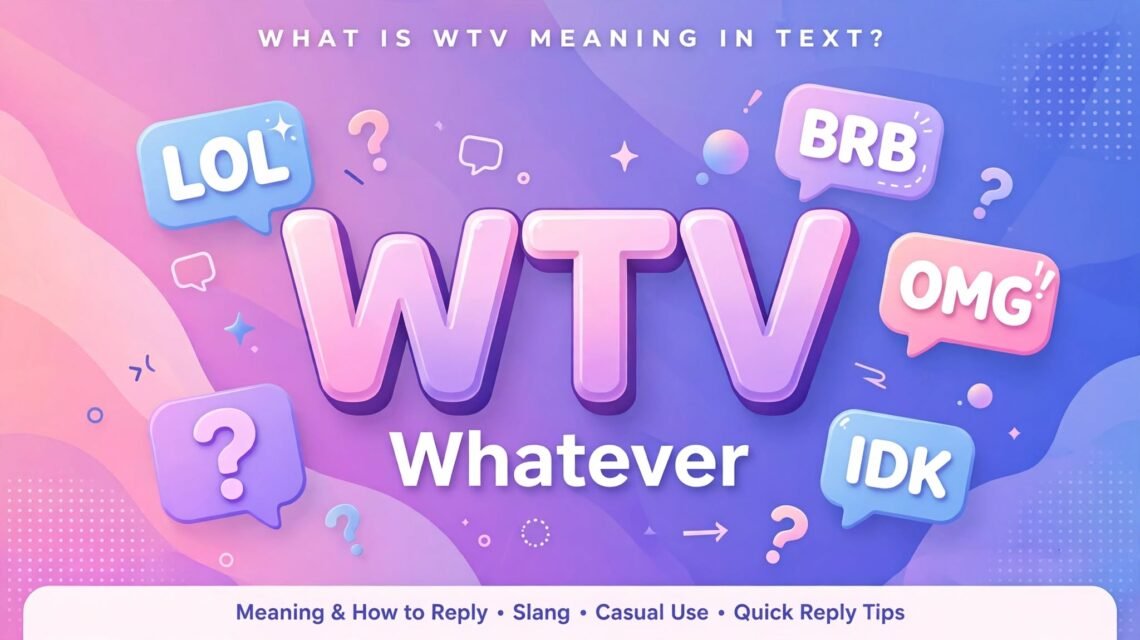
The wtv meaning in text is most commonly “whatever.” People use WTV as a shortened version of the word “whatever” when chatting online or sending quick text messages. It saves time and fits the casual style of digital communication.
For example:
- “Wtv, it’s fine.”
- “Wtv you want.”
- “I can go wtv day works.”
- “Wtv, let’s just leave.”
- “Do wtv makes you happy.”
In most conversations, WTV does not represent a completely different word. It is simply an abbreviation. Like many texting shortcuts, its meaning depends on context.
The word “whatever” itself can have several meanings. It may show that someone does not care about a choice, accepts any option, or wants to end a discussion. Because of this, WTV can sound neutral, friendly, dismissive, annoyed, or sarcastic.
That makes the surrounding conversation important.
If someone writes “WTV you want”, they may mean that you can choose. If someone says “WTV, I’m done talking”, the same abbreviation can sound irritated or dismissive.
WTV Meaning in Texting and Online Chats
The wtv meaning in text usually stays the same across texting apps, social networks, and online chats. People commonly use it in informal communication where speed and convenience matter more than formal grammar.
You might see WTV on platforms such as:
- Text messages
- Instagram chats
- Snapchat messages
- TikTok comments
- Facebook Messenger
- Discord
- Online gaming chats
- Group chats
- Casual social media conversations
WTV is especially common in short, informal messages. Someone may choose it because typing three letters feels quicker than writing the full word.
For example, imagine two friends discussing where to eat:
Friend 1: “Pizza or burgers?”
Friend 2: “Wtv you want.”
Here, WTV means “whatever.” The speaker is saying that either choice is acceptable.
Now consider a different conversation:
Friend 1: “Why are you still arguing about this?”
Friend 2: “Wtv.”
In this case, the abbreviation may suggest that the person does not want to continue the discussion.
So, understanding the abbreviation is only the first step. Understanding the tone is equally important.
WTV Meaning in Text: Does It Always Mean “Whatever”?
Although WTV meaning in text usually refers to “whatever,” context can affect how the abbreviation should be interpreted. Most everyday uses point to “whatever,” but the emotional meaning can vary considerably.
Consider these examples.
WTV Can Show Indifference
A person may use WTV when they genuinely do not have a preference.
Example:
“Which movie should we watch?”
“WTV you pick.”
Here, the speaker is saying that either movie is fine.
WTV Can Show Acceptance
Sometimes WTV means that someone is willing to accept another person’s decision.
Example:
“Should we meet at 6 or 7?”
“WTV works for you.”
The person is not necessarily annoyed. They are simply leaving the decision open.
WTV Can Sound Dismissive
A short “WTV” can also end a conversation.
Example:
“You never listen to me.”
“WTV.”
In this situation, the response may sound like “whatever” in a dismissive sense.
WTV Can Sound Sarcastic
Tone becomes even more important when someone uses WTV after an argument.
Example:
“You said you would help me.”
“WTV.”
Depending on the relationship, this could communicate frustration or sarcasm.
The abbreviation itself does not tell you the speaker’s exact emotion. You need to consider the conversation before and after it.
What Does WTV Stand For in Texting?
WTV stands for “whatever” in most texting and social media conversations. It belongs to the larger group of internet abbreviations designed to make casual communication quicker.
Texting culture has produced many shortened forms. Examples include:
- IDK — I don’t know
- TBH — To be honest
- BTW — By the way
- IMO — In my opinion
- NVM — Never mind
- WTV — Whatever
- LOL — Laughing out loud
- OMG — Oh my God
These abbreviations can make messages shorter and more conversational.
WTV is particularly useful when the full word “whatever” would feel unnecessarily formal or long. It works best in relaxed conversations between people who understand common texting slang.
WTV Meaning in Text From a Girl
The wtv meaning in text does not automatically change when a girl uses it. In most cases, she simply means “whatever.” The important part is the context and tone of her message.
For example:
“Wtv you want, I’m okay with it.”
This sounds flexible and relaxed.
But:
“Wtv. I don’t care anymore.”
This sounds much more dismissive or frustrated.
It is easy to overanalyze abbreviations when someone you like sends them. However, WTV alone cannot reliably tell you how someone feels about you.
Look at the complete conversation instead.
Ask yourself:
- What were you discussing?
- Did the person use punctuation?
- Did they normally use abbreviations?
- Did their previous messages sound friendly?
- Did an argument happen before the message?
- Did they continue the conversation afterward?
These details provide much more useful context than the abbreviation by itself.
WTV Meaning in Text From a Guy
When a guy uses WTV in a text, it generally has the same basic meaning: whatever. The gender of the sender does not create a different standard definition.
For example:
“WTV works for me.”
This usually means any option is acceptable.
On the other hand:
“WTV, forget it.”
This may indicate frustration or a desire to stop discussing something.
If you are trying to understand a message from someone you know, avoid treating WTV as a secret code. Instead, consider the entire exchange.
A person’s normal texting style also matters. Some people use abbreviations constantly. Others rarely use them. A short reply may therefore have different significance depending on the person’s usual communication habits.
How to Reply to WTV in Text
Knowing wtv meaning in text is useful, but the next question is often: How should you reply? The best response depends on what the sender appears to mean.
If They Mean “Any Choice Is Fine”
You can simply make the decision.
Examples:
- “Okay, let’s do pizza.”
- “Cool, 7 PM works.”
- “I’ll choose then.”
- “Sounds good!”
If They Sound Annoyed
Avoid immediately responding with another dismissive abbreviation. A calm question can clarify the situation.
Examples:
- “Are you upset?”
- “Did I say something wrong?”
- “I feel like something is bothering you.”
- “We can talk about it if you want.”
If They Are Ending the Conversation
You can respect their space.
Examples:
- “Okay, no worries.”
- “Alright, we can talk later.”
- “Sure, take care.”
- “Okay, I understand.”
If They Are Being Playful
You can match their casual tone.
Examples:
- “Haha, okay.”
- “Your choice then 😂”
- “Fair enough.”
- “You decide!”
The key is to match the tone without creating unnecessary conflict.
WTV Examples in Real Text Conversations
Looking at examples is one of the easiest ways to understand how WTV works.
Example 1: Choosing Food
Person A: “What do you want for dinner?”
Person B: “WTV you want.”
Meaning: Person B does not have a preference.
Example 2: Choosing a Time
Person A: “Can we meet at 5?”
Person B: “Wtv time works.”
Meaning: Person B is flexible about the time.
Example 3: Ending an Argument
Person A: “You always have to be right.”
Person B: “WTV.”
Meaning: Person B may be dismissing the complaint or ending the argument.
Example 4: Casual Acceptance
Person A: “Should I send it today?”
Person B: “WTV works.”
Meaning: Either option is acceptable.
Example 5: Frustration
Person A: “I thought we agreed on this.”
Person B: “Wtv, do what you want.”
Meaning: The speaker may feel frustrated or unwilling to continue the discussion.
Example 6: Friendly Conversation
Person A: “Which color should I get?”
Person B: “Wtv color you like!”
Meaning: The person is letting the other person decide.
These examples show why WTV cannot always be interpreted from the abbreviation alone.
Is WTV Rude in Texting?
WTV is not automatically rude. Its tone depends heavily on the situation.
A message such as:
“WTV you prefer.”
can sound perfectly neutral.
But:
“WTV. I’m done.”
can sound cold or dismissive.
The difference comes from the context.
Other factors can also influence how WTV feels:
- The relationship between the people
- The topic being discussed
- The sender’s usual texting style
- Punctuation
- Emojis
- The length of the reply
- Whether an argument happened
- Whether the person continues chatting afterward
A one-word response can sometimes appear harsher than a longer message because it provides little emotional context.
For example, “WTV 😂” may feel playful to some readers, while “WTV.” may feel more serious. Still, punctuation is not a perfect indicator of emotion.
If the meaning is unclear, asking politely is safer than assuming the person is angry.
WTV vs. Whatever: What Is the Difference?
The main difference between WTV and “whatever” is formality and length, not basic meaning.
| Expression | Meaning | Typical Use |
| WTV | Whatever | Casual texting |
| Whatever | Whatever | Casual or standard writing |
| Whatever you want | Any choice is fine | Clear and conversational |
| WTV you want | Whatever you want | Informal texting |
“Whatever” is the complete word. WTV is the shortened texting form.
If you are writing a formal message, use “whatever” or a clearer phrase instead of WTV.
For example:
Casual:
“WTV works.”
More polished:
“Whatever works for you.”
Formal:
“Either option works for me.”
The choice depends on the audience and setting.
Common Mistakes When Interpreting WTV
People sometimes assume that a short abbreviation has one fixed emotional meaning. That can lead to unnecessary misunderstandings.
Here are some common mistakes to avoid.
Assuming WTV Means the Person Is Angry
A person may simply be saying that they have no preference.
Assuming WTV Is Always Friendly
In some conversations, it can sound dismissive.
Reading Too Much Into the Abbreviation
WTV is usually just a shortened form of “whatever.” It does not automatically reveal romantic interest, dislike, or another hidden message.
Ignoring the Rest of the Conversation
The surrounding messages often provide the strongest clue about meaning.
Using WTV in Formal Communication
Texting abbreviations generally belong in informal settings. Use standard language in professional emails, applications, academic work, and formal notices.
How to Understand the Tone of WTV
The meaning of WTV becomes easier to identify when you examine the whole message.
Consider these clues:
Neutral context:
“WTV you prefer is fine.”
This suggests flexibility.
Friendly context:
“WTV you want 😂”
The emoji and casual wording may make the message feel relaxed.
Argument context:
“WTV. I’m not discussing this.”
This likely communicates dismissal or frustration.
Decision-making context:
“WTV works for me.”
This usually means the sender accepts any option.
The same three letters can therefore perform different conversational functions. The dictionary-style meaning stays close to “whatever,” but the pragmatic meaning can change.
When Should You Use WTV?
You can use WTV when the conversation is informal and the other person understands common texting slang.
Good situations include:
- Talking with friends
- Casual group chats
- Social media messages
- Gaming chats
- Informal conversations
- Quick personal texts
You should generally avoid it when writing:
- Job applications
- Business emails
- Academic assignments
- Official documents
- Customer-service messages
- Formal workplace communication
Instead of writing “WTV,” you can write “whatever,” “either option is fine,” or “I’m okay with either.”
The clearer version is often better when the relationship or setting requires a professional tone.
Final Thoughts on WTV Meaning in Text
The wtv meaning in text is usually “whatever,” making it a simple and common abbreviation in casual digital communication. People use it to express flexibility, indifference, acceptance, or, in some situations, frustration or dismissal. The abbreviation itself does not determine the speaker’s exact emotion. Context does.
When you see WTV in a message, read the complete conversation before deciding what the sender means. Look at the topic, wording, punctuation, emojis, and the person’s usual communication style. If the message still seems unclear, a simple question can prevent misunderstanding.
Frequently Asked Questions
What does WTV mean in text?
WTV meaning in text is usually “whatever.” It is an informal abbreviation used in texting, social media, and online conversations. Depending on context, it can show flexibility, indifference, acceptance, frustration, or dismissal.
Is WTV short for whatever?
Yes. WTV is commonly used as a shortened form of “whatever.” It is mainly found in casual digital communication rather than formal writing.
Is WTV rude?
WTV is not inherently rude. A phrase such as “WTV you want” may sound neutral, while a standalone “WTV” during an argument may sound dismissive. Context determines the tone.
What does WTV mean from a girl?
The basic meaning does not change based on the sender’s gender. WTV usually means “whatever.” To understand the intended tone, consider the full conversation and the person’s normal texting habits.
What does WTV mean from a guy?
When a guy sends WTV, it generally means “whatever.” It may express flexibility or indifference, or it may sound dismissive if used during an argument. The surrounding message provides the best clue.
How should I reply to WTV?
Your reply should match the situation. If the sender is flexible, make a choice. If they are ending the conversation, give them space. Simple replies such as “Okay,” “Sounds good,” or “Are you upset?” can work depending on context.
Conclusion
Understanding wtv meaning in text is simple once you know that it usually stands for “whatever.” People use WTV in casual texts, social media chats, and online conversations to show that they have no preference, accept a choice, or do not want to continue a discussion. However, its tone can change with the context. A friendly message may sound relaxed, while a short reply during an argument may seem dismissive or annoyed.
Before replying to WTV, look at the full conversation and consider the sender’s usual texting style. If the meaning is unclear, ask a simple question instead of making assumptions. WTV is useful for casual communication, but it is better to use complete words in professional, academic, or formal messages. Once you understand its context, you can easily recognize when WTV means “whatever” and respond naturally.