
When it comes to texting, short forms help people share messages quickly. TTM meaning slang is one abbreviation you may see in chats, social media comments, and private messages. It usually means “talk to me.” People use it to invite someone to start a conversation, share their thoughts, or explain what is happening. The exact meaning can depend on the conversation and the person using it. This guide explains what TTM means, how people use it, how to reply, and what mistakes to avoid. You will also find simple examples that make this texting abbreviation easy to understand.
What Does TTM Mean in Slang?
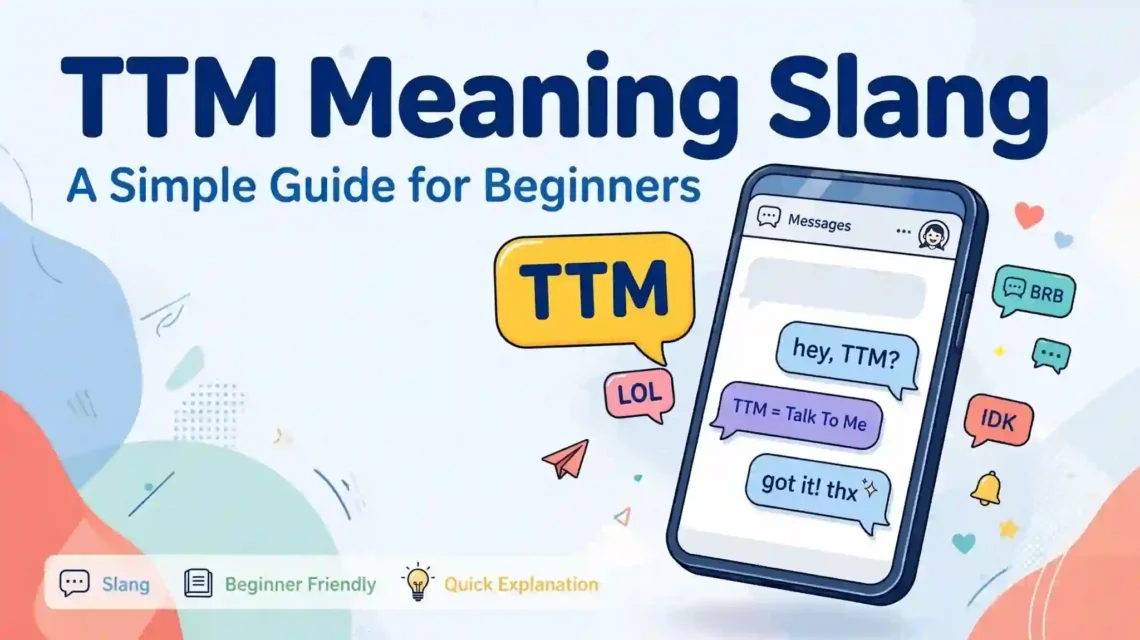
TTM usually stands for “Talk To Me.” It is a casual texting abbreviation. People use it when they want someone to speak, reply, or share something.
The three letters come from the first letter of each word:
- T = Talk
- T = To
- M = Me
Instead of typing the full phrase, someone can write TTM. The message stays short and easy to understand.
For example:
- “You seem quiet today. TTM.”
- “I have not heard from you. TTM when you are free.”
- “I need your opinion. TTM.”
- “Bored at home. TTM!”
Each example invites another person to communicate. The reason may change, but the main idea stays the same.
Someone might want to hear about your day. Another person may need advice or want to discuss a problem. A friend may simply feel bored and want company.
The phrase can also show care. If someone notices that you seem upset, they may use TTM to encourage you to open up. It can make the conversation feel personal and welcoming.
Is TTM an Abbreviation or an Acronym?
TTM is more accurately called an initialism. An initialism uses the first letters of a group of words. People usually say each letter separately instead of reading the letters as one word.
TTM works like other common texting shortcuts:
- BRB: Be Right Back
- IDK: I Don’t Know
- LMK: Let Me Know
- HMU: Hit Me Up
- TTYL: Talk To You Later
People often call all these expressions internet slang. That description is common in everyday conversation. However, TTM is technically a shortened form of a phrase.
You do not need to know the technical label to understand it. Just remember that TTM is a quick way to invite someone to talk.
How People Use TTM in Text Messages
The ttm meaning slang can change slightly with the situation. A sender may want a casual chat, a serious conversation, or a quick reply. The words around the abbreviation help explain the intention.
Here are some common ways people use it.
To Start a Conversation
Someone may send TTM when they want to begin a chat. They may not have a specific topic in mind. They simply want to talk.
Example:
Person A: “Hey, what are you doing?”
Second person: “Nothing much.”
Person A: “TTM, I’m bored!”
In this chat, the sender wants company. They are asking the other person to keep the conversation going.
To Ask Someone to Open Up
People also use TTM when they think someone has a problem. It can be a gentle way to show concern.
Example:
Friend: “You haven’t seemed happy lately.”
You: “I’m just dealing with some things.”
Friend: “TTM. I’m here for you.”
Here, TTM means the friend is ready to listen. They want you to share your feelings if you feel comfortable.
To Ask for More Details
A person may use TTM when they want an explanation. This use often appears after someone mentions an interesting event.
Example:
You: “Something crazy happened at school today.”
Friend: “Wait, TTM!”
The friend wants to hear the full story. They are asking you to explain what happened.
To Keep a Chat Going
TTM can also help revive a conversation that has become quiet. Someone may send it when they want the other person to respond.
Example:
“It’s been a while since we talked. TTM when you get a chance.”
This message sounds friendly. It does not always mean the sender is upset. They may simply want to reconnect.
TTM Meaning on Snapchat, Instagram, and TikTok
The ttm meaning slang usually stays close to “Talk To Me” across social media platforms. However, the tone can depend on the post, message, and relationship between the users.
TTM on Snapchat
On Snapchat, people often use short expressions in snaps and private chats. TTM can invite a friend to start a conversation.
Examples:
- “I’m bored. TTM.”
- “TTM when you get home.”
- “Haven’t seen you all day. TTM!”
- “You seem different today. TTM if you want.”
A friend may use it to ask for company. Someone who likes you may use it to show interest in talking.
Do not assume every Snapchat message has a romantic meaning. The sender may only want a normal conversation.
TTM on Instagram
On Instagram, TTM may appear in direct messages, story replies, or comments. Someone might use it to invite another user to message them.
Examples:
- “Your story looks fun. TTM about it!”
- “I saw your post. TTM!”
- “Anyone online? TTM.”
- “TTM if you want to share your thoughts.”
A short comment can have more than one possible meaning. Look at the post and the rest of the conversation before you decide what the sender intends.
TTM on TikTok
TikTok users may use TTM in comments, captions, or direct messages. It can encourage a creator or another user to respond.
Examples:
- “That story needs more details. TTM!”
- “I relate to this video. TTM.”
- “You seem interesting. TTM sometime.”
- “I have a question about this trend. TTM.”
TTM is not an official TikTok feature or platform command. It is an informal abbreviation that users bring into their conversations.
Is TTM Friendly, Flirty, or Rude?
TTM is usually friendly and casual. Its tone depends on the sender’s words, the relationship, and the situation. The abbreviation alone does not prove that someone is flirting or acting rudely.
When TTM Sounds Friendly
A friend may use TTM because they want to catch up or hear about your day.
Examples:
- “Long time no talk. TTM soon!”
- “How was your trip? TTM.”
- “I’m free tonight. TTM if you are.”
These messages show interest in conversation. They do not carry a strong romantic meaning.
When TTM Sounds Flirty
Someone may use TTM to show that they want your attention. In a romantic conversation, it can sound playful or inviting.
Examples:
- “I was hoping you’d text me. TTM.”
- “Can’t sleep. TTM? 😉”
- “You always make me smile. TTM later.”
The emoji and surrounding words can make the message feel flirty. Still, one abbreviation is not enough to know someone’s feelings.
When TTM Sounds Demanding
TTM can sound impatient if someone uses it like an order. The tone becomes stronger when the sender adds words such as “now” or sends repeated messages.
Examples:
- “TTM right now.”
- “Why aren’t you answering? TTM.”
- “I said TTM!”
These messages may feel pushy. You do not have to reply immediately. You can respond when you have time and feel comfortable.
How to Reply to TTM in a Text
Your reply depends on what you want from the conversation. You can keep it short, ask a question, or explain that you are busy.
Here are some natural replies for different situations.
Casual Replies
Use these when a friend wants to chat:
- “Sure! What’s up?”
- “I’m here. Tell me.”
- “Hey, how’s it going?”
- “What’s on your mind?”
- “Of course. What’s happening?”
- “I’m free now. Let’s talk.”
These replies sound relaxed. They help the conversation start without making things awkward.
Friendly and Caring Replies
Choose a warm response when someone seems worried or wants to discuss something personal:
- “I’m listening. Tell me what’s going on.”
- “Sure, you can talk to me.”
- “What’s bothering you?”
- “I’m here if you need me.”
- “Let’s talk. Are you okay?”
- “You can share anything you’re comfortable with.”
A caring reply can help someone feel heard. You do not need to solve their problem right away. Sometimes listening is enough.
Flirty Replies
If you like the sender, you can answer with a playful message:
- “I was waiting for you to say that.”
- “Only if you make the conversation interesting.”
- “You have my attention.”
- “I was hoping you’d text.”
- “What do you want to talk about? 😊”
- “I could talk to you all night.”
Use these replies only when the tone feels right. A playful message may not suit every friendship or situation.
Replies When You Are Busy
You can respond politely without starting a long chat:
- “I’m busy right now. Can we talk later?”
- “Give me a little time.”
- “I’ll message you when I’m free.”
- “Can’t talk at the moment, but I’ll reach out.”
- “I’m working right now. Talk soon!”
You do not need to explain every detail of your schedule. A simple, honest response is enough.
TTM vs. Similar Texting Abbreviations
Some texting abbreviations have similar purposes. However, they do not always communicate the same thing. Knowing the difference can help you choose the right phrase.
| Abbreviation | Full form | Meaning |
| TTM | Talk To Me | Invites someone to talk |
| HMU | Hit Me Up | Asks someone to contact you |
| TTYL | Talk To You Later | Ends a conversation for now |
| LMK | Let Me Know | Asks someone to share information |
| WYD | What You Doing? | Asks what someone is doing |
| WYA | Where You At? | Asks someone’s location |
TTM vs. HMU
TTM means “Talk To Me.” HMU means “Hit Me Up.” Both can invite contact, but they have slightly different uses.
For example:
- “TTM when you’re free.” This directly invites a conversation.
- “HMU when you’re free.” This asks the other person to contact you.
HMU can refer to a call, text, or another way of getting in touch. TTM focuses more clearly on talking.
TTM vs. TTYL
These expressions have almost opposite purposes.
TTM invites someone to talk. TTYL means “Talk To You Later” and often signals that the current conversation is ending.
Examples:
- “I’m bored. TTM!” invites a chat.
- “I have to go. TTYL!” ends a chat politely.
TTM vs. LMK
LMK means “Let Me Know.” People use it when they want an update, answer, or decision.
For example:
- “TTM about your weekend.” asks someone to talk about it.
- “LMK if you’re free this weekend.” asks for a clear answer.
These small differences make texting easier to understand.
Other Possible Meanings of TTM
Although “Talk To Me” is the common meaning in casual texting, the letters TTM can stand for other phrases in different fields.
One example is “Trailing Twelve Months.” This term appears in finance and business. It refers to financial results from the most recent twelve-month period.
For example, a company may report its revenue for the trailing twelve months. This helps readers review a recent year of performance, even when the company’s financial year does not match the calendar year.
The context makes the difference:
- Text message: TTM usually means “Talk To Me.”
- Financial report: TTM may mean “Trailing Twelve Months.”
- Casual social media chat: It often invites someone to talk or reply.
You should not apply the texting meaning to every situation. If you see TTM in a business report, financial article, or technical document, read the surrounding information first.
Common Mistakes to Avoid When Using TTM
TTM is easy to use, but a few mistakes can cause confusion. Keep these points in mind before sending it.
- Using it in formal messages: TTM is casual. Avoid it in job applications, business emails, and official communication.
- Assuming it always sounds romantic: Friends use it too. Do not read a romantic meaning into every message.
- Sending it without context: A person may not understand what you want to discuss. Add a few words when needed.
- Expecting an instant reply: TTM invites a conversation, but it does not require someone to answer immediately.
- Ignoring the situation: The same abbreviation can mean different things in different fields. Check the topic before deciding.
- Using it with someone you barely know: A direct request to talk may feel too familiar in some situations. A polite full sentence can work better.
A little context makes short messages clearer. If you are unsure whether the other person understands TTM, write the full phrase instead.
FAQs About TTM Meaning Slang
1. What does TTM mean in texting?
TTM usually means “Talk To Me” in casual text messages. Someone uses it when they want you to start a conversation, reply, or share what is on your mind.
2. What does TTM mean from a guy?
A guy may use TTM to ask you to talk, continue a chat, or share something. It can sound friendly or flirty, but the surrounding message gives you a better idea.
3. What does TTM mean from a girl?
A girl may use TTM to invite you to chat or encourage you to open up. It does not always suggest romantic interest. The relationship and conversation help explain her intention.
4. Is TTM rude?
No, TTM is not usually rude or offensive. It is a casual invitation to talk. However, repeated or demanding messages such as “TTM right now” may sound impatient.
5. What is the difference between TTM and HMU?
TTM means “Talk To Me,” while HMU means “Hit Me Up.” TTM focuses on having a conversation. HMU is a broader request for someone to contact you.
6. Can TTM have another meaning?
Yes. In finance, TTM can mean “Trailing Twelve Months.” In casual texting, however, “Talk To Me” is the usual meaning. Always use the conversation’s context to understand it.
Research note: The common texting expansion is “Talk To Me”; TTM also has a separate financial meaning, “Trailing Twelve Months.”
Conclusion: Understanding TTM in Everyday Chats
The ttm meaning slang is simple in most casual conversations: it stands for “Talk To Me.” People use it to start a chat, ask for a reply, share their feelings, or invite someone to explain something. You may see it in text messages, Snapchat chats, Instagram DMs, TikTok comments, and other online conversations.
Its tone depends on the situation. A friend may use it to catch up. Someone who cares about you may use it to encourage you to open up. A person with romantic interest may use it to get your attention. The abbreviation itself does not confirm someone’s intentions.
Remember that TTM can have a different meaning in fields such as finance, where it may stand for “Trailing Twelve Months.” Always consider the topic and surrounding words.
When you receive TTM in a casual chat, a simple reply such as “Sure, what’s up?” is often enough. Keep your response natural, clear, and comfortable for you.