
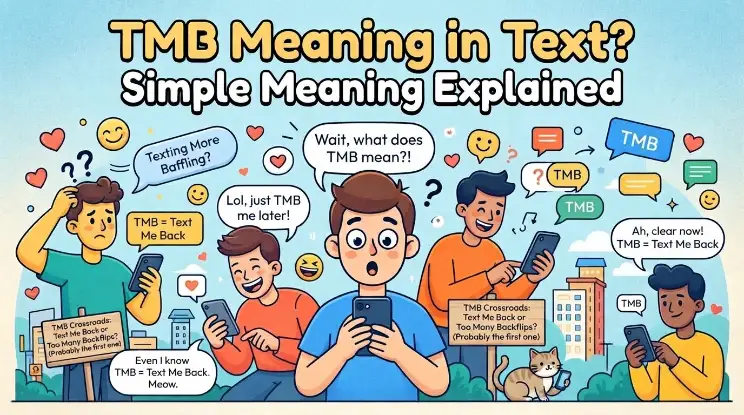
When it comes to texting, short forms can make a simple message confusing. One abbreviation you may see in chats, comments, or social media is tmb meaning in text. If someone sends “TMB” to you, the meaning usually depends on the conversation and the person using it. In most casual texting situations, TMB means “text me back.” It is a quick way to ask someone to reply to a message. For example, a friend might write, “When you get home, TMB.” This means, “When you get home, text me back.”
TMB Meaning in Text: The Most Common Definition
The most common meaning “text me back,” especially in casual conversations between friends, family members, or people who regularly communicate through messages. It works as a short request for a reply.
TMB usually appears at the end of a sentence. A person may use it when they expect you to respond later.
For example:
- “I need to ask you something. TMB.”
- “Call me when you are free, then TMB.”
- “I sent you the details. TMB when you see them.”
- “Let me know if you can come. TMB.”
- “I’m heading out now. TMB later.”
In each case, the writer wants the other person to send a message in response.
What Does “Text Me Back” Actually Mean?
“Text me back” is a direct request to reply through a text message. It does not necessarily mean the person wants an immediate response.
The timing depends on the situation.
If a friend says:
“TMB when you get home.”
They probably mean that they want a reply after you arrive home.
If someone says:
“TMB ASAP.”
The added “ASAP” changes the urgency. They want you to reply as soon as possible.
This makes TMB flexible. The abbreviation itself simply asks for a response. The surrounding words explain when or why the response matters.
Is TMB the Same as “Reply”?
Not exactly.
“Reply” is a general word. It can refer to answering a text, email, comment, or other communication.
“TMB” is more specific because it refers to sending a text message back.
For example:
- “Please reply” can work in an email.
- “TMB” usually fits a text or chat conversation.
- “Text me back” sounds more natural when someone wants a phone message.
So, TMB is best understood as a casual texting abbreviation rather than a formal alternative to “reply.”
TMB Meaning in Texting and Social Media
The tmb meaning in text can also appear on social media, messaging apps, and online chats. The meaning generally stays the same when the conversation involves direct messages.
People often shorten phrases because texting rewards speed and convenience. Instead of typing “text me back,” someone may simply type “TMB.”
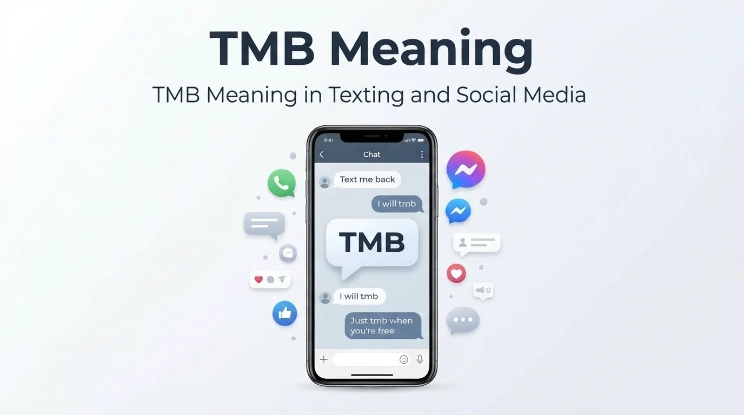
You may encounter it in:
- Text messages
- Instagram direct messages
- Facebook Messenger
- Snapchat conversations
- WhatsApp chats
- Group chats
- Online messaging
- Casual social media conversations
The exact platform does not usually change the meaning.
Why Do People Use TMB?
There are several simple reasons people use abbreviations such as TMB.
1. It saves time.
Typing three letters is faster than writing an entire phrase.
2. It keeps messages casual.
TMB feels informal and conversational.
3. It fits mobile communication.
People often prefer short messages when typing on a phone.
4. It is easy to understand in context.
Once someone knows the abbreviation, they can recognize it quickly.
5. It matches online texting culture.
Many common abbreviations developed because people wanted faster ways to communicate.
TMB belongs to the same broad category as abbreviations such as LOL, BRB, BTW, IDK, and TBH.
Is TMB a Modern Slang Term?
TMB is better described as a texting abbreviation than as a slang word.
Slang often changes the vocabulary or style of language. Text abbreviations usually shorten existing phrases.
For example:
- LOL = laughing out loud
- BRB = be right back
- BTW = by the way
- IDK = I don’t know
- TMB = text me back
These abbreviations make digital conversations shorter without changing the basic meaning of the original phrase.
How to Understand TMB From Context
Understanding the tmb meaning in text is easiest when you read the entire message instead of focusing on the three letters alone. Context can tell you whether the sender wants a reply, uses TMB differently, or refers to another term.
For example, consider this message:
“I’m busy right now. TMB tonight.”
The meaning is clear. The sender wants the other person to message them later.
Now consider:
“Did you finish the project? TMB.”
Again, the sender probably wants a response.
But abbreviations can sometimes have multiple meanings. That is why context matters.
Look at the Words Around TMB
The surrounding words often provide the strongest clue.
If the message contains words such as:
- “reply”
- “message”
- “later”
- “when you can”
- “when you get home”
- “let me know”
- “call me”
- “send me a message”
then TMB probably relates to communication.
For example:
“TMB when you get a chance.”
This strongly suggests “text me back.”
Consider Who Sent the Message
The relationship between the sender and receiver can also help.
A close friend may use TMB without explanation because both people understand casual texting language.
A workplace contact may avoid it because abbreviations can sound too informal.
If a teacher, manager, customer, or business sends an unfamiliar abbreviation, do not automatically assume its casual texting meaning. Check the surrounding message first.
Pay Attention to Capital Letters
TMB is usually written in uppercase because it is an abbreviation.
However, people may also type it as:
- tmb
- Tmb
- TMB
In most casual chats, capitalization does not change the meaning.
Someone typing “tmb” is usually not trying to create a different word from “TMB.”
Examples of TMB in Text Messages
The best way to understand an abbreviation is to see it in realistic examples. These examples show how TMB can work in everyday conversations.
Example 1: Asking for a Later Reply
Person A: “I’m going into a meeting.”
Person B: “Okay, TMB when you’re done.”
Here, TMB means that Person B wants a text after the meeting.
Example 2: Asking Someone to Respond
Person A: “I sent you the address. TMB when you get it.”
This simply asks the recipient to confirm that they received the information.
Example 3: Talking to a Friend
Person A: “I’m leaving for the store. TMB if you need anything.”
The sender wants the friend to send a message if they need something.
Example 4: Making Plans
Person A: “Let me know if you’re coming tonight. TMB.”
The sender expects a response about the plans.
Example 5: A More Urgent Request
Person A: “TMB ASAP. It’s important.”
Here, the sender clearly wants a quick response.
The abbreviation itself does not create the urgency. The phrase “ASAP” provides that extra meaning.
TMB vs. Other Texting Abbreviations
The tmb meaning in text becomes even clearer when you compare it with similar abbreviations. Several texting terms involve responding, messaging, or communication, but they do not mean exactly the same thing.
| Abbreviation | Meaning | Typical Use |
| TMB | Text me back | Asking someone to reply |
| TBH | To be honest | Introducing an honest opinion |
| BTW | By the way | Adding another point |
| BRB | Be right back | Temporarily leaving a chat |
| IDK | I don’t know | Showing uncertainty |
| LMK | Let me know | Asking someone to provide information |
| DM | Direct message | Referring to a private social message |
| PM | Private message | Referring to a private message |
| ASAP | As soon as possible | Showing urgency |
When Should You Use TMB?
The tmb meaning in text makes it useful in casual situations where you want someone to send a response. It works best when the relationship and communication style are informal.
You can use TMB with:
- Close friends
- Family members
- People you regularly text
- Casual group chats
- Informal online conversations
For example:
“TMB when you get there.”
This sounds natural between friends.
When Should You Avoid TMB?
TMB may not be suitable for formal communication.
Avoid it when writing:
- Business emails
- Job applications
- Official requests
- Academic messages
- Formal customer service communication
- Professional documents
Instead of:
“TMB ASAP.”
A professional version might be:
“Please reply as soon as possible.”
The second version is clearer and more appropriate for formal settings.
This does not mean TMB is wrong. It simply means that communication style should match the audience.
Common Mistakes When Using TMB
Even though TMB is simple, people can misunderstand abbreviations when they use them without enough context. A few common mistakes can make a short message less clear.
Mistake 1: Using It With Someone Who Does Not Know the Abbreviation
Not everyone knows every texting abbreviation.
If you send TMB to someone unfamiliar with the term, they may ask what it means.
If clarity matters, write the full phrase instead.
Mistake 2: Using It in Formal Writing
Texting abbreviations usually belong in casual communication.
Using TMB in a formal email can make the message appear overly casual.
Consider your audience before using it.
Mistake 3: Assuming Every “TMB” Means the Same Thing
Abbreviations can have different meanings in different communities.
A business, organization, technical field, or online group may use TMB as an acronym for something unrelated to texting.
That is why context matters.
If you see TMB in a technical document, report, medical discussion, or company document, do not automatically interpret it as “text me back.”
Mistake 4: Adding Too Many Abbreviations
A message filled with abbreviations can become difficult to read.
For example:
“TMB ASAP BTW IDK if u can come.”
A friend might understand it, but a clearer message would be easier to follow.
Short communication should still be understandable.
Frequently Asked Questions About TMB
What does TMB mean in a text message?
The most common meaning is “text me back.” People use it to ask someone to reply through a text message, often in casual conversations.
Is TMB rude in texting?
No. TMB is not inherently rude. Its tone depends on the surrounding words and relationship between the people. “TMB when you’re free” sounds casual, while “TMB NOW” may sound demanding.
What does TMB mean on social media?
On social media, TMB can mean “text me back” when someone uses it while asking for a response. However, acronyms can have different meanings in specific communities, so context remains important.
Is TMB the same as LMK?
No. TMB means “text me back,” while LMK means “let me know.” TMB specifically asks for a text response. LMK asks someone to provide information, regardless of the communication method.
Can I use TMB in a professional message?
You can, but it is usually better to avoid it in formal communication. Writing “Please reply” or “Please get back to me” is clearer and more professional.
Does lowercase “tmb” mean something different?
Usually, no. In casual texting, “tmb,” “Tmb,” and “TMB” generally carry the same meaning. Capitalization usually reflects typing style rather than a different definition.
Conclusion
The tmb meaning in text is usually simple: “text me back.” People use this abbreviation in casual conversations when they want someone to send a reply. You may see it in text messages, group chats, direct messages, and other informal online conversations.Context remains important. TMB can have other meanings outside everyday texting, so you should consider the full message before deciding what the abbreviation means. If the conversation involves replying, messaging, or staying in touch, “text me back” is usually the best interpretation.