
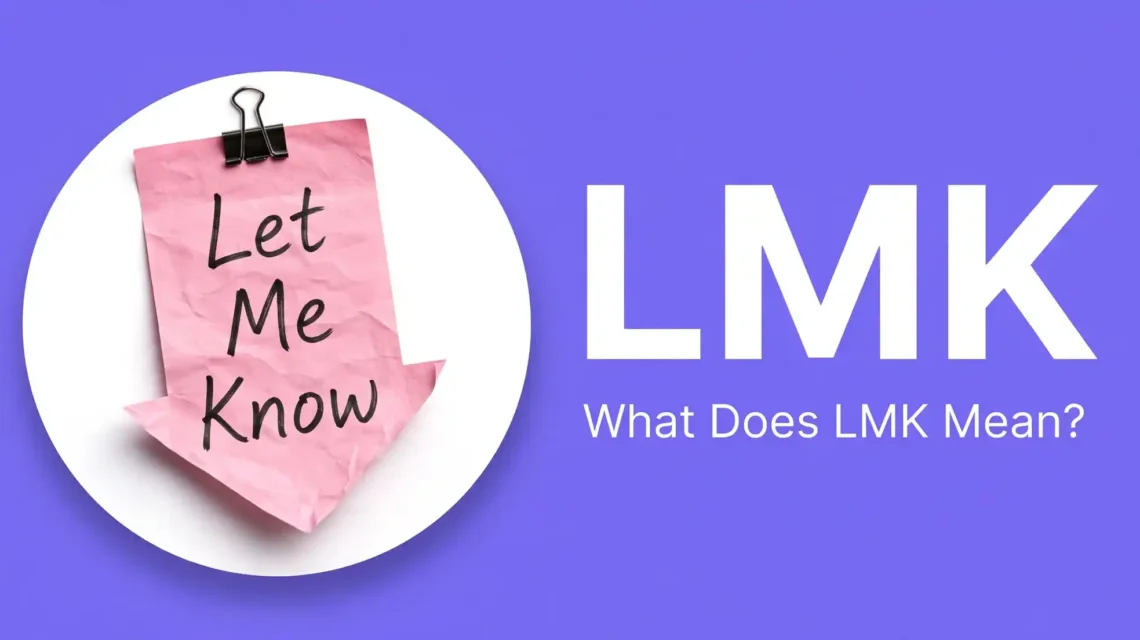
When it comes to texting, people often use short forms to save time and keep conversations casual. LMK meaning in text is simple: “Let me know.” You may see LMK in messages, social media comments, group chats, emails, and online conversations. It usually asks someone to share information, make a decision, or give an update later.
What Does LMK Mean in Texting?
LMK stands for “Let me know.” It is a common texting abbreviation that asks another person to provide information, an answer, or an update when they have it.
The phrase does not usually require an immediate answer. Instead, it tells the other person to respond when they know something or have made a decision.
For example:
- “LMK if you are free tonight.”
- “LMK when you arrive.”
- “LMK what you think.”
- “LMK if you need help.”
- “LMK your plans for Saturday.”
In each example, LMK means “Let me know.”
The abbreviation works because “let me know” appears often in everyday conversation. Texting makes people more likely to shorten familiar phrases, especially when they are speaking with friends or people they know well.
LMK Meaning in Text: Simple Definition
The easiest way to remember LMK meaning in text is to think of it as a quick request for information.
If someone says “LMK,” they usually mean:
“Please tell me when you know.”
The exact information depends on the rest of the message.
For example, “LMK what time you are coming” asks for a time. “LMK if you want to join” asks for a decision. “LMK when you finish” asks for an update.
So, LMK does not have just one type of use. It can work with plans, opinions, decisions, updates, questions, and requests.
How Is LMK Used in a Text Message?
LMK can appear at the beginning, middle, or end of a casual message, depending on how the sentence is written.
Here are some common patterns:
Asking About Plans
People often use LMK when they want to know someone’s plans.
Examples:
- “LMK if you want to go out later.”
- “LMK what time works for you.”
- “LMK if you’re coming to the party.”
- “LMK your plans for tomorrow.”
These messages leave the choice with the other person. They do not necessarily demand an instant response.
Asking for an Opinion
Someone may use LMK when they want your thoughts.
Examples:
- “LMK what you think about this.”
- “LMK which one you like.”
- “LMK if this sounds good.”
- “LMK your opinion.”
In these cases, the abbreviation means the person wants feedback.
Offering Help
LMK can also appear in helpful or supportive messages.
For example:
- “LMK if you need anything.”
- “LMK if I can help.”
- “LMK if you want me to pick you up.”
- “LMK if you have any questions.”
This form is common because it gives the other person an easy way to ask for assistance.
LMK Meaning in Text With Examples
Understanding an abbreviation becomes easier when you see it in realistic conversations. The following examples show how the meaning changes slightly depending on the context.
Example 1: Making Plans
Alex: “Are you free Saturday?”
Sam: “Not sure yet.”
Alex: “Okay, LMK.”
Here, Alex means, “Let me know when you know whether you are free.”
Example 2: Asking for a Decision
Mia: “We have two restaurants to choose from.”
Jordan: “Which one do you prefer?”
Mia: “LMK what you want.”
Here, Mia asks Jordan to share a choice.
Example 3: Asking for an Update
Parent: “LMK when you get home.”
Child: “Okay.”
In this situation, the speaker wants an update after the person arrives.
Is LMK Formal or Informal?
LMK is generally considered informal. It works well in casual conversations, but it may not be the best choice for every professional or formal situation.
You can use LMK with:
- Friends
- Family members
- Classmates
- Close coworkers
- People you regularly message
- Social media contacts
- Group chats
For formal communication, writing the full phrase may sound more polished.
For example, instead of:
“LMK if you have any questions.”
You could write:
“Please let me know if you have any questions.”
The second version is more suitable for a formal email, business letter, academic message, or communication with someone you do not know well.
That does not mean LMK is always inappropriate at work. In a relaxed workplace where people commonly use abbreviations, it may be perfectly normal. The right choice depends on the relationship, communication channel, and workplace culture.
LMK in Professional Messages
Consider the difference between these messages:
Casual workplace chat:
“LMK when the report is ready.”
Formal email:
“Please let me know when the report is ready.”
Both communicate the same basic idea. The second simply uses a more formal tone.
A useful rule is simple: if you would normally use casual texting language with the person, LMK may fit. If the message needs a professional tone, write the phrase in full.
What Does LMK Mean in Different Situations?
The meaning of LMK stays consistent, but the purpose behind it can vary.
In Friendships
Friends often use LMK when making plans.
For example:
“LMK if you want to hang out tonight.”
The speaker wants the friend to confirm whether they want to meet.
In Dating Conversations
People may use LMK when discussing plans or interest.
For example:
“LMK when you’re free.”
This usually means the person wants the other person to share their availability.
It does not automatically carry a romantic meaning. The surrounding conversation determines the tone.
In School or College Chats
Students can use LMK when discussing assignments, meetings, or study plans.
For example:
“LMK if you want to study together.”
Or:
“LMK when you finish the assignment.”
The abbreviation keeps the message short while maintaining the same meaning.
In Work Chats
Coworkers may use LMK when they need information or confirmation.
For example:
“LMK if you need anything from the office.”
Or:
“LMK once you’ve reviewed the document.”
In a professional setting, however, consider whether the communication style calls for abbreviations.
On Social Media
LMK also appears in comments, direct messages, captions, and replies.
Someone might write:
“LMK your favorite!”
This means “Let me know your favorite,” usually referring to something already mentioned in the post.
How to Reply When Someone Says LMK
When someone sends you a message containing LMK, your response should answer the question or provide the requested information.
There is no special response required just because the person used an abbreviation.
For example:
Message: “LMK if you’re free tonight.”
Possible replies:
- “Yes, I’m free.”
- “Sure, I’ll let you know.”
- “I can’t tonight, sorry.”
- “I’m not sure yet. I’ll tell you later.”
If the message says:
“LMK when you get home.”
You can simply reply after arriving:
- “I’m home.”
- “Just got home.”
- “Made it home.”
If someone says:
“LMK what you think.”
You could reply:
- “I like it.”
- “I think it looks great.”
- “I’ll check it and let you know.”
The best reply depends on what information the sender requested.
Short Replies to LMK Messages
If you want to keep your response casual, you can use short phrases such as:
- “Sure!”
- “Will do.”
- “Okay, I will.”
- “Sounds good.”
- “I’ll let you know.”
- “Definitely.”
- “Got it.”
These replies work well in casual conversations.
LMK vs. Lmk
You may see LMK written in different capitalization styles:
- LMK
- lmk
- Lmk
All usually mean the same thing.
Texting does not follow strict capitalization rules, so people often type abbreviations in lowercase. A message such as “lmk when you’re free” has the same meaning as “LMK when you’re free.”
Capitalization generally does not change the definition.
Common Mistakes When Using LMK
Although LMK is simple, people can misunderstand its tone or use it in the wrong setting.
Mistake 1: Using It in Every Professional Message
LMK can make a formal message feel too casual.
Instead of using it automatically, consider your audience. A client, professor, manager, or official contact may prefer the full phrase.
Mistake 2: Thinking LMK Means “Answer Me Now”
LMK usually does not mean that someone must respond immediately.
For example:
“LMK when you know.”
This allows the person to respond after they have the information.
However, urgency can come from the rest of the message. For example:
“LMK ASAP if you can come.”
Here, “ASAP” adds urgency. LMK itself does not necessarily mean “right now.”
Mistake 3: Assuming It Has a Hidden Meaning
LMK normally has a straightforward meaning. It is not automatically romantic, rude, sarcastic, or emotional.
The surrounding words and relationship between the people determine the tone.
Mistake 4: Ignoring the Context
The phrase after LMK tells you what the sender wants.
Compare:
- “LMK when you arrive.”
- “LMK if you want to come.”
- “LMK what you think.”
The first asks for an update. The second asks for a decision. The third asks for an opinion.
Is LMK Rude or Polite?
LMK is usually neutral and casual. By itself, it is not considered rude.
However, tone depends on the complete message.
For example:
“LMK if you need help.”
This sounds friendly and supportive.
But:
“LMK.”
As a standalone message, it can sometimes feel brief or slightly abrupt because it does not explain what information the sender wants.
If clarity matters, add the specific request.
Instead of:
“LMK.”
Try:
“LMK if you’re coming tonight.”
This gives the recipient enough context to understand what they need to answer.
When Should You Use LMK?
LMK works best when you are having a casual conversation and want someone to provide information later.
Why Do People Use LMK in Texting?
Texting encourages short, efficient communication. People often remove unnecessary words, shorten phrases, and use abbreviations because the meaning remains easy to understand.
LMK is especially convenient because “let me know” appears frequently in everyday conversations.
Instead of typing:
“Please let me know when you have decided.”
Someone may write:
“LMK when you decide.”
The shorter version is quick to type and easy to understand.
Common texting abbreviations such as LOL, BRB, BTW, IDK, and LMK became popular because digital conversations often favor speed and informality. Many of these expressions now appear across texting, social media, gaming chats, and online communities.
Frequently Asked Questions About LMK
What does LMK mean in text?
LMK meaning in text is “let me know.” People use it when they want someone to provide information, give an opinion, confirm a plan, or send an update.
What does LMK mean from a girl?
If a girl texts “LMK,” it normally means “let me know.” The abbreviation itself does not have a special meaning based on gender. Context determines what she wants you to tell her.
What does LMK mean from a guy?
If a guy uses LMK, it also normally means “let me know.” For example, “LMK when you’re free” asks you to share your availability.
Is LMK informal?
Yes. LMK is mainly a casual texting abbreviation. It works well in personal messages and informal chats. For formal communication, writing “let me know” or “please let me know” may be more appropriate.
How do you respond to LMK?
Respond with the information the person requested. You can say “Sure, I will,” “I’ll let you know,” or give the answer directly if you already know it.
Does LMK mean “let me know later”?
Not exactly. LMK means “let me know,” while the timing depends on the rest of the message. It can refer to an answer now, later, or after something happens.
Conclusion
Understanding LMK meaning in text is easy once you know that it stands for “let me know.” People use this abbreviation to ask for information, opinions, decisions, confirmations, or updates. It appears frequently in casual texts, social media messages, group chats, and informal conversations.The meaning stays the same, but the purpose changes with context. “LMK when you arrive” asks for an update, while “LMK if you want to come” asks for a decision. “LMK what you think” asks for an opinion.