
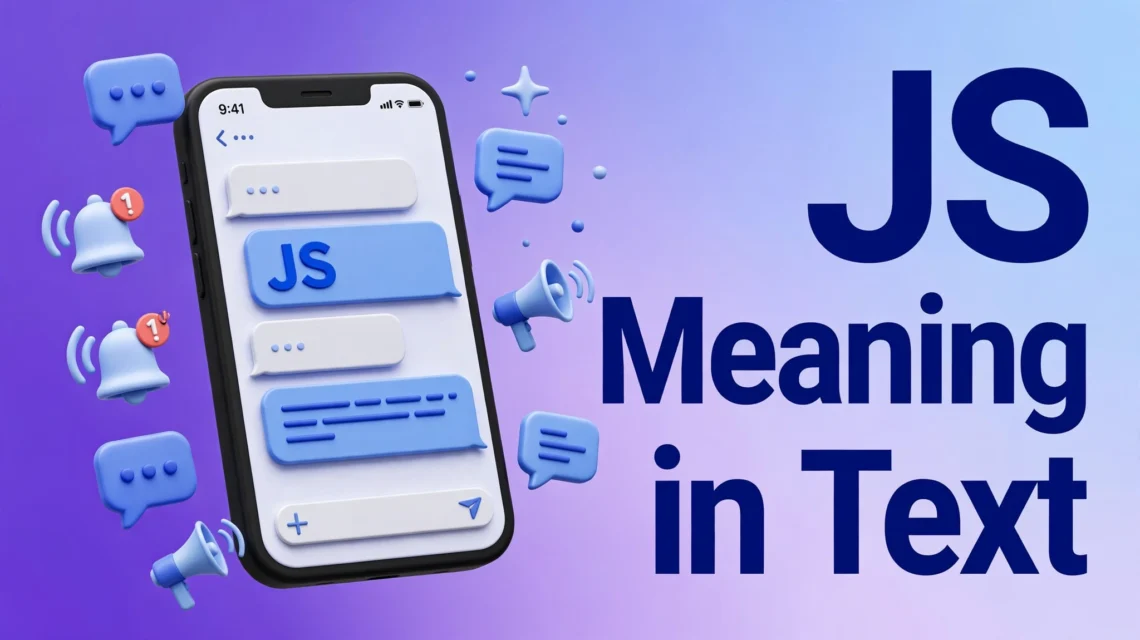
When it comes to js meaning in text, many people see these two letters in a message and wonder what the sender intended. Texting slang often depends on context, tone, and the platform where someone uses it. Unlike words with one fixed definition, “JS” can have more than one meaning in digital conversations. In many casual chats, it can mean “just saying.” It may add a personal comment, soften an opinion, or show that the sender is simply sharing a thought. In other settings, “JS” can mean something completely different. This guide explains the common meanings, examples, context clues, similar abbreviations, and mistakes to avoid. By the end, you will know how to understand JS without guessing.
JS Meaning in Text: The Most Common Definition
The most common js meaning in text is “just saying,” especially in casual messages, social media comments, and online conversations. It usually introduces a personal thought or opinion.
For example, someone might text:
“That movie was not that good, JS.”
Here, “JS” means “just saying.” The sender is emphasizing that they are giving their honest opinion.
People often use the abbreviation because texting favors short and quick expressions. Instead of typing the full phrase, they use two letters. This makes the conversation faster while keeping the meaning clear to people who know the slang.
The phrase can appear at the beginning or end of a message. Its position can slightly change the tone.
Examples include:
- “JS, I think you should wait.”
- “You could ask her directly, JS.”
- “That outfit looks great, JS.”
- “I would not do that, JS.”
In each case, the sender adds a thought without presenting it as an absolute fact.
What Does JS Stand For in Texting?
In casual texting, JS usually stands for “just saying.” The phrase has a simple purpose: it tells the reader that the sender is offering a comment or opinion.
Consider this message:
“You should probably check the address again, JS.”
The sender is not necessarily giving an order. They are adding a suggestion and making it clear that they are expressing their own view.
“Just saying” can serve several purposes:
- Sharing an opinion
“JS, I think the first option is better.” - Adding a suggestion
“You could call them, JS.” - Emphasizing a point
“You were late again, JS.” - Softening a comment
“JS, maybe you should take a break.” - Adding a casual tone
“That was actually pretty funny, JS.”
The meaning becomes clearer when you read the entire sentence instead of focusing only on the abbreviation.
js meaning in text Messages With Examples
Understanding js meaning in text becomes easier when you see it in realistic conversations. The same abbreviation can sound friendly, neutral, playful, or slightly sarcastic depending on the surrounding words.
Example 1: Giving an Opinion
Person A: “Should I buy the black shoes?”
Person B: “I like the white ones more, JS.”
Here, the sender simply shares a preference. They do not necessarily expect the other person to follow the advice.
Example 2: Making a Suggestion
Person A: “I cannot decide what to do.”
Person B: “Maybe talk to your friend first, JS.”
The abbreviation makes the statement sound more like a personal suggestion.
Example 3: Pointing Something Out
Person A: “I think everything is fine.”
Person B: “You have not replied to them in three days, JS.”
In this example, “just saying” can draw attention to an obvious fact.
How JS Changes Meaning Based on Context
The exact interpretation of js meaning in text depends heavily on context. Texting abbreviations rarely work like dictionary words. Readers should consider the entire conversation before deciding what the sender means.

Casual Conversations
Among friends, JS commonly means “just saying.” The tone may be relaxed and informal.
Example:
“You always choose the same restaurant, JS.”
This could be playful teasing rather than serious criticism.
Social Media
On platforms such as social networks, people may use JS in comments or direct messages. It can introduce an opinion without making the comment sound too formal.
For example:
“This version looks better, JS.”
The person is simply stating a preference.
Is JS Always Short for “Just Saying”?
No. JS meaning in text is not always “just saying.” Abbreviations can have multiple meanings, and JS is a good example.
In technology discussions, JS commonly refers to JavaScript, a programming language widely used to create interactive behavior on websites and web applications.
For example:
“I am learning JS.”
In a programming conversation, this almost certainly means JavaScript rather than “just saying.”
Other contexts can also give JS different meanings. The surrounding topic is the strongest clue.
If someone says:
“I need to fix this JS code.”
They are clearly discussing JavaScript.
If someone says:
“JS, I think you should go.”
The conversational context suggests “just saying.”
Therefore, never interpret an abbreviation without considering the subject of the conversation.
Why Do People Use JS Instead of “Just Saying”?
Texting culture encourages short forms. People often want to communicate quickly without typing every word.
There are several reasons someone may choose JS.
Speed
Typing two letters takes less time than typing the full phrase. This matters during fast conversations.
Convenience
Common abbreviations become familiar to regular users. Once people understand them, they can read messages quickly.
Informal Tone
JS can make a message feel casual. It often works better in a friendly chat than formal wording.
Is JS Rude or Friendly?
The abbreviation itself is neither rude nor friendly. Its tone depends on the sentence, relationship, and situation.
A friendly example might be:
“Your presentation was really good, JS.”
A neutral example might be:
“I think you should check the time, JS.”
A more critical example might be:
“You said you would finish yesterday, JS.”
The same two letters appear in all three messages, but the emotional effect changes.
When JS Sounds Friendly
JS can sound friendly when the message contains a compliment, light suggestion, or harmless opinion.
For example:
“That color looks great on you, JS.”
When JS Sounds Sarcastic
A person can also use “just saying” sarcastically.
For example:
“You said you were not hungry, JS.”
The sender may be pointing out that the person later asked for food.
When JS Sounds Defensive
Someone may use it after making a controversial opinion.
“I think the plan needs more work, JS.”
Here, the phrase can make the comment feel less confrontational.
How to Reply When Someone Says JS
If someone sends JS meaning “just saying,” you usually do not need a special response. Reply to the actual point they made.
For example:
Them: “I think you should take the earlier train, JS.”
You: “That might actually be a good idea.”
You can also ask for clarification if the abbreviation is unclear.
For example:
“What do you mean by JS?”
This works especially well when the conversation could involve more than one meaning.
If the context clearly involves programming, treat JS as JavaScript.
Them: “I am working with JS today.”
You: “Are you working on a JavaScript project?”
Here, the topic gives you a strong clue.
Common Mistakes When Interpreting JS
Short abbreviations can cause misunderstandings. A few simple habits can help.
Mistake 1: Assuming One Meaning Always Applies
Not every JS means “just saying.” Always check the context.
Mistake 2: Ignoring the Conversation Topic
If people are discussing coding, JavaScript may be the obvious meaning. If they are discussing personal opinions, “just saying” may fit better.
Mistake 3: Taking “Just Saying” Too Literally
Sometimes JS adds tone rather than new information. The sender may simply be emphasizing that they are sharing their opinion.
Mistake 4: Assuming the Sender Is Being Rude
“Just saying” can sound sharp in some messages, but it does not automatically mean the sender is angry.
Look at the words before and after the abbreviation.
Mistake 5: Using It in Formal Writing
Texting abbreviations can look too casual in professional communication. When clarity matters, write the complete phrase.
When Should You Use JS in a Message?
If you use JS to mean “just saying,” choose situations where casual language makes sense.
Good situations include:
- Texting close friends
- Casual group chats
- Informal social media conversations
- Gaming chats
- Friendly online discussions
- Casual direct messages
You may want to avoid it in:
- Formal emails
- Academic assignments
- Official documents
- Job applications
- Business proposals
- Serious customer communication
In formal writing, clarity is usually more valuable than saving a few keystrokes.
How to Tell Which JS Meaning Someone Intended
When you receive JS, use a simple three-step process.
1. Look at the Topic
Ask what the conversation is about.
If it involves programming, JavaScript is likely.
If it involves personal opinions, plans, or casual discussion, “just saying” may be more likely.
2. Read the Full Sentence
Do not interpret JS by itself.
Compare:
“JS, you should call him.”
with:
“The JS code keeps crashing.”
The first clearly fits “just saying.” The second clearly relates to JavaScript.
3. Consider the Relationship
Friends often use informal slang. A technical colleague may use JS as shorthand for JavaScript.
The relationship does not determine the meaning alone, but it provides another useful clue.
Why Texting Abbreviations Can Have Multiple Meanings
Texting language develops naturally. Users shorten phrases to make communication faster. As abbreviations spread, different communities may assign different meanings to the same letters.
This happens because language depends on context.
For example, someone in a programming community may immediately understand JS as JavaScript. Someone chatting with a friend may read the same letters as “just saying.”
Neither interpretation is automatically wrong.
The key is contextual meaning.
This is why online communication can sometimes create misunderstandings. A short abbreviation removes information that the full phrase would provide.
When the meaning is uncertain, asking a quick question is better than making a strong assumption.
Final Thoughts on JS Meaning in Text
The main js meaning in text is usually “just saying” when people use it in casual chats, comments, or direct messages. It often introduces an opinion, suggestion, observation, or personal thought. The tone can be friendly, neutral, sarcastic, or slightly critical, depending on the surrounding message.
However, JS does not have one universal meaning. In technology and programming, it commonly means JavaScript. The easiest way to identify the intended meaning is to look at the conversation topic, read the entire sentence, and consider the relationship between the people communicating.
If you are unsure, asking for clarification is perfectly reasonable. Texting slang changes quickly, and different online communities use the same abbreviations in different ways.
Frequently Asked Questions
What does JS mean in text messages?
The most common casual js meaning in text is “just saying.” People use it to introduce or emphasize an opinion, suggestion, or observation.
Does JS mean JavaScript in texting?
It can. In conversations about coding, websites, software, or programming, JS commonly means JavaScript. The subject of the conversation usually makes the intended meaning clear.
Is JS slang?
Yes, when JS means “just saying,” it is informal texting slang. It fits casual chats and social media better than formal communication.
Is JS rude when someone texts it?
Not necessarily. JS can sound friendly, neutral, sarcastic, or critical. The tone depends on the complete message and the situation.
What is the difference between JS and TBH?
JS usually means “just saying,” while TBH means “to be honest.” Both can introduce opinions, but they carry slightly different tones and purposes.
Conclusion
Understanding js meaning in text is simple once you look at the context. In most casual conversations, “JS” means “just saying.” People use it to share an opinion, suggestion, or observation in a quick and informal way. However, JS can also mean JavaScript when the conversation involves coding, websites, or technology.In short, JS is a useful texting abbreviation, but it does not have only one meaning. When the context is unclear, asking the sender what they mean can prevent confusion and keep the conversation clear.