
When it comes to texting, short forms help people send messages quickly. YWA meaning in text can be confusing because this abbreviation does not have one widely recognized meaning across every chat or social media platform. Its interpretation depends on the conversation, the sender, and the words around it.
This guide explains how to approach YWA, how to work out what someone may mean, and how to reply without misunderstanding the message. You will also find sample conversations, related abbreviations, common mistakes, and practical tips for using texting slang clearly.
What Does YWA Meaning in Text?
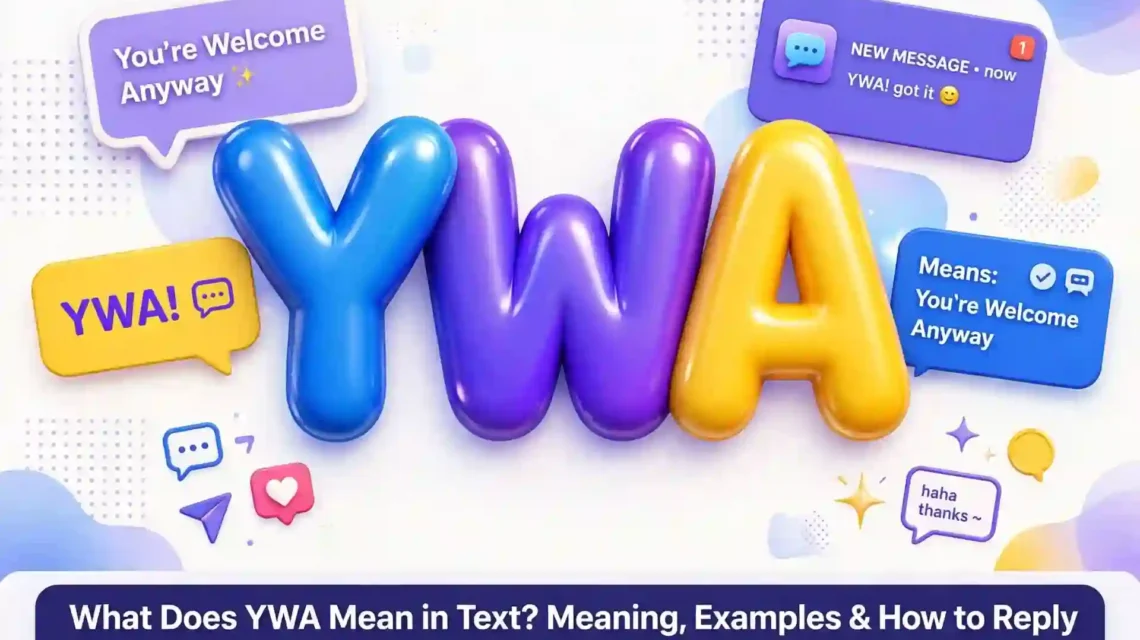
YWA usually stands for “You’re Welcome Anyway.” People use it when they help someone but do not receive a thank-you, or when someone’s response makes their effort feel overlooked.
The word anyway gives the phrase its special tone. It can sound playful, sarcastic, mildly annoyed, or teasing. For example, a person might send YWA after sharing useful information and getting no response.
The abbreviation is informal. It is not as common as LOL, BRB, or IDK. Its meaning is documented in online slang references, including Slang.net.
What does YWA stand for?
The Full Form of YWA
YWA is made from the first letters of “You’re Welcome Anyway”:
- Y stands for You’re.
- W stands for Welcome.
- A stands for Anyway.
The phrase works like a playful version of “you’re welcome.” It can suggest that the sender expected appreciation but did not receive it.
Why People Add “Anyway”
The final word changes the feeling of the message. A simple “YW” politely accepts someone’s thanks. YWA can imply that the sender is saying “you’re welcome” even though the other person forgot to say thank you.
It may also be used after an attempt to help did not solve the problem. The sender still wants to acknowledge their effort. The exact tone depends on the relationship and the conversation.
How ywa meaning in text Is Used in Text Messages
YWA often appears in casual conversations between friends, siblings, classmates, or people who know each other well. It is usually a short response after someone has helped, shared advice, or done a favor.
When Someone Forgets to Say Thank You
A person may use YWA when they help someone and receive no thanks. It points out the missing appreciation without starting a serious argument.
Example:
- Alex: I sent you the notes from class.
- Sam: I got them.
- Alex: YWA 😂
Alex is joking about not receiving a thank-you. The laughing emoji makes the message feel less serious.
When Someone Gives Unwanted Advice
YWA can also follow advice that another person did not request or appreciate. The sender may use it to show that they tried to help, even if the advice was not useful.
Example:
- Mia: You should try restarting your laptop.
- Jay: I already did that.
- Mia: Well, YWA.
Mia uses the abbreviation with a slightly sarcastic tone. She knows her suggestion did not solve the problem, but she still wants to acknowledge her effort.
When Someone’s Help Does Not Work
Sometimes people use YWA after trying to help but failing to fix the issue. The phrase can show that they made an effort, even if the result was not successful.
Example:
- Chris: I tried fixing the app, but it still crashes.
- Taylor: Thanks for trying.
- Chris: YWA!
Here, the expression sounds lighthearted. It accepts the other person’s appreciation despite the unsuccessful result.
What Tone Does ywa meaning in text Express?
The meaning stays the same, but the feeling can change. Some people use YWA as a joke. Others use it to show frustration or disappointment.
Playful and Friendly
Close friends may use YWA to tease each other. It can make a small situation funny instead of turning it into a complaint.
For example, a friend might send YWA after sharing a playlist and receiving only a thumbs-up. The sender probably wants a little more appreciation, but the message may be completely harmless.
Sarcastic or Slightly Annoyed
YWA can sound sarcastic when someone feels ignored. The sender may believe their help deserved recognition.
For example:
- You: I cleaned the whole kitchen.
- Friend: Nice.
- You: YWA.
The reply suggests that “nice” was not enough appreciation. It may be funny between close friends, but it could sound rude in another conversation.
Polite but Awkward
A person may also use YWA when they are unsure how to respond after helping someone. It can acknowledge the situation without writing a long message.
However, the abbreviation is not always understood. If the other person does not know it, the message may create confusion. A full phrase is clearer when the relationship is not very casual.
How to Reply to ywa meaning in text
Your reply depends on how the sender uses the abbreviation. If the message sounds playful, you can answer with humor. If it feels sarcastic, a calm response can prevent a small misunderstanding from becoming an argument.
Funny Replies to ywa meaning in text
A funny answer works well when you and the sender often tease each other. Keep the response light and avoid making the situation more serious than it needs to be.
Try these replies:
- “Thank you, your service is appreciated 😂”
- “I was just about to say it!”
- “You’re welcome for my late thank-you.”
- “Don’t let the fame go to your head.”
- “Fine, thanks for saving the day!”
- “A round of applause for you 👏”
- “You deserve a medal for that.”
- “Thanks, I owe you one.”
These replies show that you understand the joke. They also give the sender the appreciation they may have wanted.
Friendly and Polite Replies to ywa meaning in text
If you want to keep the conversation warm, use a simple and sincere response. This is useful when someone helped you with a task or shared something important.
You could reply:
- “Haha, thank you!”
- “I appreciate your help.”
- “Thanks for taking the time.”
- “You’re the best.”
- “I didn’t mean to forget. Thanks!”
- “That was kind of you.”
- “I owe you one.”
- “Thanks again for helping me.”
A polite reply is often the safest choice when you are unsure whether the sender is joking or genuinely annoyed.
Replies Whenywa meaning in text Sounds Sarcastic
If the sender seems upset, acknowledge their effort instead of responding with another sarcastic comment. A direct answer can clear up the situation.
For example:
- “Sorry, I forgot to say thanks. I appreciate it.”
- “I didn’t mean to ignore your help.”
- “You’re right. Thanks for helping me.”
- “I appreciate what you did.”
- “I was distracted earlier. Thank you.”
You do not need to argue over three letters. A short, honest response can resolve the misunderstanding.
YWA Meaning in text on Snapchat, Instagram, and Other Platforms
YWA is a texting abbreviation rather than a feature or official term belonging to one social media platform. People may use it in private messages, group chats, or casual online conversations.
ywa meaning in text on Snapchat
On Snapchat, YWA may appear in a direct message after someone shares a photo, answers a question, or helps a friend. It can be a quick way to tease someone who forgot to show appreciation.
For example:
- You: I sent you the homework answers.
- Friend: Got them.
- You: YWA 😭
The crying emoji may signal playful frustration. Still, the relationship and earlier messages matter more than the platform.
ywa meaning in text on Instagram
Instagram users may send YWA in direct messages or group chats. It can follow a shared post, a recommendation, or help with an account-related question.
For example:
- Person A: I found the restaurant you wanted.
- Person B: Looks good.
- Person A: YWA 😂
The sender may be joking because they expected a thank-you. A simple emoji can make the tone easier to understand.
ywa meaning in text on WhatsApp
WhatsApp conversations often include short forms between friends and family. Someone might use YWA after arranging plans, sending a document, or helping with a small problem.
For example:
- A: I booked the table for tonight.
- B: Okay, perfect.
- A: YWA!
The sender may be asking for a little recognition in a friendly way. In a family group, the phrase may become part of a running joke.
ywa meaning in text on TikTok and Other Online Chats
People can also use the abbreviation in TikTok messages, gaming chats, or other online spaces. It may appear after someone shares a tip, answers a question, or offers help.
It is not a platform-specific feature. Do not assume that every person on TikTok or another app will understand it. Many users may be unfamiliar with the abbreviation.
YWA vs. YW: What Is the Difference?
YWA and YW look similar, but they do not always communicate the same tone. Both relate to the phrase “you’re welcome.” The extra letter in YWA adds a little more attitude.
| Abbreviation | Full form | Common tone |
| YWA | You’re Welcome Anyway | Teasing or sarcastic |
| YW | You’re Welcome | Polite and casual |
| TY | Thank You | Appreciative |
| TYSM | Thank You So Much | Warm and grateful |
| NP | No Problem | Friendly and relaxed |
| NVM | Never Mind | Depends on context |
When to Use ywa meaning in text Instead of YW
Choose YWA when you want to make a playful point about missing appreciation. It may fit a conversation with a close friend who understands your humor.
Use YW when someone thanks you and you simply want to respond politely. It is shorter and less likely to sound sarcastic.
For example:
- Friend: Thanks for sending the picture!
- You: YW!
This feels natural and friendly.
If your friend ignores your help and you want to tease them, you might write:
- You: I sent you the full study guide.
- Friend: Cool.
- You: YWA 😂
The second example has a different mood. The sender is pointing out that the response lacked appreciation.
Is YWA More Rude Than YW?
YWA can sound sharper because it may suggest that the sender expected a thank-you. YW usually carries no such implication.
Neither abbreviation is automatically rude. The relationship, situation, punctuation, and emojis all affect how the message sounds. If you are speaking with someone you do not know well, choose the clearer and more neutral option.
Common Mistakes People Make When Using YWA
A short abbreviation can still cause a misunderstanding. Knowing what to avoid helps you use it more naturally.
Assuming Everyone Knows the Meaning
Not everyone uses the same texting slang. Some people may know YW but have never seen YWA. Sending an unfamiliar abbreviation without context can leave the recipient confused.
If someone asks what it means, simply write “you’re welcome anyway.” Do not make them feel awkward for asking.
Using It in Formal Conversations
YWA is casual and can sound sarcastic. It is not a good choice for a professional email, a message to a client, or a formal conversation with a manager.
Use a complete response instead:
- “You’re welcome.”
- “Happy to help.”
- “I’m glad I could assist.”
- “No problem at all.”
These phrases sound more professional and avoid unnecessary confusion.
Treating Every YWA Message as an Insult
A sender may be joking rather than expressing real frustration. Do not assume they are angry just because they used the abbreviation.
Look at the conversation. A laughing emoji, a friendly relationship, or a playful exchange may suggest that the sender is teasing.
Using It With Someone Who May Misread the Tone
Some people prefer direct and sincere communication. They may interpret YWA as a complaint, especially if they do not know the sender well.
If you want to avoid that risk, write a full sentence. Clear language is better than a clever abbreviation when the situation matters.
Tips for Using YWA Naturally
The best way to use YWA is to match it to the conversation. A short expression can carry a strong tone, so think about how the recipient may read it.
Use It With People You Know
YWA works best with friends, siblings, or people who understand your sense of humor. They are more likely to recognize a playful comment and respond in the same spirit.
Add an Emoji When Appropriate
An emoji can make your intention easier to understand. For example:
- “YWA 😂” can sound playful.
- “YWA 😭” may suggest mock frustration.
- “YWA 🙄” can sound more sarcastic.
Emojis do not guarantee that someone will understand your tone. Use them as clues, not as a substitute for clear communication.
Consider the Situation
Think about whether the other person actually ignored your help. If they are busy, distracted, or dealing with something important, a sarcastic reply may be unfair.
A little patience can prevent an unnecessary disagreement.
Choose Clear Words When Needed
If you are upset, explain what bothered you instead of relying on slang. For example, “I spent time helping, so I would appreciate a thank-you” communicates your feelings more clearly.
A direct sentence may feel less playful, but it reduces the chance of confusion.
Frequently Asked Questions About YWA
1. What does YWA mean in text?
YWA stands for “You’re Welcome Anyway.” It is an informal abbreviation people use after helping someone, especially when they do not receive a thank-you. It can sound playful, teasing, or mildly sarcastic.
2. Isywa meaning in text a rude abbreviation?
Not always. Friends may use it as a joke when someone forgets to say thanks. However, it can sound passive-aggressive if the sender feels ignored or unappreciated. Read the surrounding conversation before deciding how to respond.
3. What doesywa meaning in text from a guy or a girl?
The abbreviation has the same basic meaning regardless of who sends it. It stands for “You’re Welcome Anyway.” It does not automatically suggest romantic interest, flirting, or anger. The sender’s relationship with you and the conversation provide more useful clues.
4. What is the difference between YWA and YW?
YW means “You’re Welcome.” It is a simple response to someone’s thanks. YWA means “You’re Welcome Anyway” and can add a teasing or sarcastic feeling. The extra word changes the tone.
5. Can I use ywa meaning in text in professional messages?
It is better to avoid it in formal communication. Some people may not understand the abbreviation, while others may interpret it as sarcasm. Use “You’re welcome” or “Happy to help” in workplace messages.
6. How should I reply when someone sends YWA?
You can respond with humor if the sender is joking. Try “Haha, thanks!” or “I appreciate your help.” If the message sounds annoyed, acknowledge their effort and offer a sincere thank-you.
Conclusion:
YWA is an informal texting abbreviation that stands for “You’re Welcome Anyway.” People often use it after offering help, sharing advice, or doing someone a favor without receiving much appreciation. It can express friendly teasing, mild sarcasm, or genuine frustration.The most important part is the context. A close friend may send it as a joke, while someone who feels ignored may use it to express annoyance.
The abbreviation does not carry a romantic meaning by itself, and it is not ideal for formal conversations.Understanding ywa meaning in text helps you read the sender’s tone and choose a suitable response. If you receive it, consider the conversation before reacting. If you want to use it, make sure the other person understands your humor. When clarity matters, a simple “you’re welcome” or “thanks for the help” is always a safe choice.