
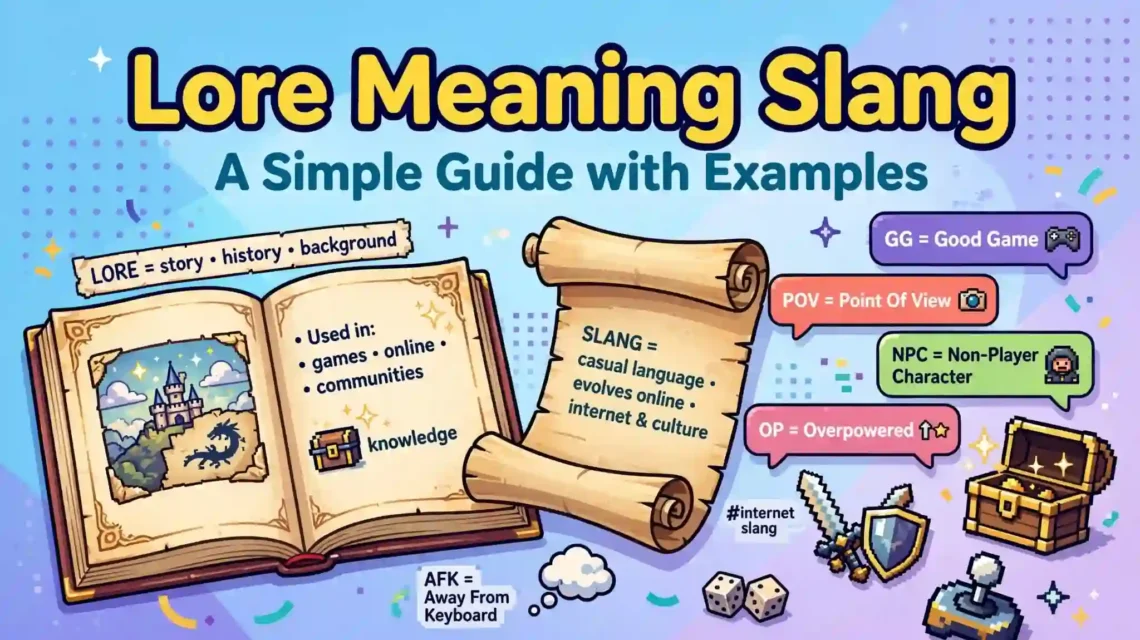
When it comes to internet slang, some old words gain fresh meanings through social media. Lore meaning slang is a great example. People use this word to talk about someone’s past, a surprising story, or the background behind a joke. You may see it in TikTok comments, Instagram captions, gaming chats, and everyday text messages. Someone might say, “You have so much lore,” after hearing an unexpected story about your life. This guide explains what lore means, where the slang comes from, and how people use it. You will also find simple examples, popular phrases, and easy replies to help you understand the word.
What Does Lore Meaning Slang?
Lore means the background story, history, or personal details that help explain a person, event, joke, or situation. Online, people often use it in a playful way.
For example, imagine your friend tells you they once lived in another country, worked at a circus, or met a famous singer. You might respond, “That is some interesting lore!” You are reacting to a surprising detail from their past.
The word can describe several kinds of background information:
- Personal history: Stories and experiences from someone’s life.
- Friendship history: Old memories, shared jokes, and past events between friends.
- Internet history: Background information about a meme, trend, or online community.
- Fictional history: Details about characters, places, and events in a movie, game, or book.
- Group history: Stories that explain why a group behaves in a certain way.
Where Did the lore meaning slang Come From?
The word lore is much older than social media. Its traditional meaning relates to knowledge, stories, and information passed down through people or communities.
In the past, people used lore to describe traditional beliefs, customs, legends, and knowledge. Folklore, for example, includes stories and traditions shared across generations. The word also became common in books, films, and video games to describe the history of fictional worlds.
Online communities helped bring the word into everyday conversations. Gamers and fans often discussed the background of fictional characters, places, and events. People then began using the same idea to describe real-life stories.
From Traditional Stories to Internet Slang
Traditional lore often involves shared knowledge. It may include legends, customs, local stories, or old beliefs. Internet users kept the idea of background information but applied it to modern topics.
For example:
- A family story about a grandparent can be family lore.
- The history behind a popular meme can be meme lore.
- A surprising fact about a friend can be personal lore.
- The history of a fictional kingdom can be fantasy lore.
This change made the word useful in casual conversations. People could describe a short personal story as if it were part of a larger fictional universe.
How Gaming and Fandom Culture Helped Popularize It
Games, movies, and books often contain stories that go beyond the main plot. Fans use lore to discuss character histories, hidden clues, important events, and details about fictional worlds.
A video game might reveal its history through conversations, notes, maps, or secret locations. Fans collect these details to understand the full story. They may call this information the game’s lore.
How People Use lore meaning slang and Social Media
People use the word in casual messages when they want to discuss a story or learn more about something. It can sound curious, funny, dramatic, or playful, depending on the conversation.
Here are some common ways to use it.
Asking “What’s the Lore?”
This phrase asks someone to explain the background behind a situation. You might use it when you see a strange comment, hear an inside joke, or notice an unusual friendship dynamic.
Examples:
- “You two have matching tattoos? What’s the lore?”
- “Everyone keeps talking about that old photo. What’s the lore?”
- “I just joined this group chat. What’s the lore here?”
- “Why does everyone call him Captain? I need the lore.”
- “You mentioned a secret trip. What’s the full lore?”
The phrase is a casual way to ask, “What happened?” or “Can you explain the story behind this?”
Saying “You Have Lore”
People say this when someone has an interesting or surprising personal history. It can be a compliment or a playful reaction.
Examples:
- “You have so much lore. I never knew that!”
- “Wait, you used to be a dancer? You have lore.”
- “Your childhood stories are full of lore.”
- “I thought I knew you, but you have hidden lore.”
- “There is clearly more lore behind that story.”
The phrase suggests that the person has more stories to share.
Using “Drop the Lore”
“Drop the lore” means share the full story or reveal the missing details. People often use it when they want someone to explain an interesting statement.
Examples:
- “You can’t say that and leave. Drop the lore!”
- “You worked with a famous actor? Drop the lore.”
- “That sounds like a wild story. Please drop the lore.”
- “I need the full story, so drop the lore.”
- “You mentioned your old school. Drop the lore!”
It is usually friendly and playful. It can also create a sense of excitement around a story.
Talking About “Deep Lore”
Deep lore refers to detailed or lesser-known background information. It often appears in gaming and fandom discussions, but people also use it for personal stories.
Examples:
- “The movie has some deep lore.”
- “That old family story has deep lore.”
- “You need to know the deep lore to understand this joke.”
- “Our friendship has years of deep lore.”
- “This meme has more deep lore than I expected.”
The phrase suggests that a topic has more history than people first realize.
Popular Lore Phrases and Their Meanings
Online conversations include several expressions built around the word. Each one adds a slightly different meaning.
Personal Lore
Personal lore means the interesting details, memories, and experiences that make up someone’s personal history. It may include funny childhood memories, unusual hobbies, travel stories, or unexpected life events.
Example: “My personal lore includes getting lost in a museum for three hours.”
Dad Lore
Dad lore describes surprising stories from a father’s past. The phrase often appears when a father casually reveals an unusual experience that his children never knew about.
Example: “My dad just told me he played in a rock band during college. The dad lore is getting crazy.”
Friend Lore
Friend lore refers to the shared history, memories, and inside jokes between friends. It can include old trips, embarrassing moments, funny mistakes, and stories that only the group understands.
Example: “You had to be there. That’s part of our friend lore.”
Relationship Lore
Relationship lore means the background stories and experiences connected to a romantic relationship. It may include how two people met, their first date, funny misunderstandings, or memorable moments.
Example: “We need to tell them the relationship lore behind that photo.”
Meme Lore
Meme lore refers to the background behind a meme, including its origin, earlier versions, recurring characters, or inside jokes.
Example: “You won’t understand this meme without knowing its lore.”
Examples of lore meaning slang Everyday Conversations
The easiest way to understand a slang word is to see it in real conversations. These examples show how people might use the word with friends, family, and online communities.
Lore in a Group Chat
Group chats often have long histories. Members share jokes, stories, and memories that new members may not understand.
Example conversation:
- Alex: “Why does everyone call Sam the chef?”
- Mia: “You don’t know the story?”
- Alex: “No. What’s the lore?”
- Mia: “He once tried to cook pasta and set off the smoke alarm.”
Here, Alex asks for the background behind the nickname. Mia explains the event that started the joke.
Lore Between Friends
Friends often reveal unexpected details about their lives. These stories can become part of their shared history.
Example conversation:
- Jamie: “I used to compete in chess tournaments.”
- Riley: “Wait, what? You have lore!”
- Jamie: “I even won a school competition once.”
- Riley: “Why have you never told me this?”
The phrase shows surprise and interest. Riley wants to learn more about Jamie’s past.
Lore on TikTok and Instagram
Social media users often share short stories in videos, captions, and comments. A creator may reveal a surprising fact about their childhood or explain the history behind an old post.
Examples:
- “The lore behind this picture is unbelievable.”
- “I need a full storytime about this.”
- “Not you dropping this much lore in one video.”
- “The comments are adding even more lore.”
- “This creator has years of lore.”
These expressions invite people to share more details or follow the story.
Lore in Gaming Communities
Players use the word to discuss fictional worlds and their histories. They may talk about characters, hidden locations, past battles, or events that explain the game’s current story.
Examples:
- “I started playing this game, but I don’t know the lore.”
- “The new update adds more lore to the story.”
- “This character’s lore is darker than I expected.”
- “You need to read the notes to understand the lore.”
- “The game’s lore connects all the characters.”
In this setting, lore usually refers to the fictional background rather than someone’s real-life experiences.
Lore vs. Backstory, Canon, and Context
The word lore is closely related to several other terms. However, these words do not always mean exactly the same thing.
| Word | Meaning | Example |
| Lore | Background stories and accumulated details | “What’s the lore behind this joke?” |
| Backstory | Earlier events that explain a person or character | “Tell me her backstory.” |
| Canon | Officially established facts in a fictional story | “That event is part of the show’s canon.” |
| Context | Information needed to understand something | “I need more context.” |
| History | Events and experiences from the past | “Their friendship has a long history.” |
How to Reply When Someone Says Lore
Your reply depends on what the other person means. They may want you to explain a story, share a personal detail, or react to something surprising.
Here are some natural responses.
When Someone Asks “What’s the Lore?”
If someone asks for the story behind something, give a short explanation. You can share the main event first and add details if they want to know more.
Try these replies:
- “It’s a long story, but I’ll explain.”
- “Where should I even begin?”
- “It started a few years ago.”
- “You’re not ready for this story.”
- “I’ll give you the short version.”
- “There’s actually a funny story behind it.”
When Someone Says “Drop the Lore”
They want you to tell the full story. You can decide how much information you feel comfortable sharing.
Try these replies:
- “Okay, here’s what happened.”
- “Let me tell you the whole story.”
- “This goes back a long way.”
- “I’ll explain everything.”
- “Get comfortable. This might take a while.”
- “I’ll share the interesting parts.”
Common Mistakes to Avoid When Using Lore
The word is easy to understand, but people sometimes use it in ways that confuse others. A little attention to context can help you use it naturally.
Thinking Lore Only Means Fiction
Lore is common in games and fictional stories, but it can also describe real people, families, friendships, and online communities. A surprising personal story can count as lore in casual slang.
Using It for Every Small Detail
Not every piece of information needs the word lore. The term works best when a detail adds background, explains a reference, or makes a story more interesting.
For example, saying “I had breakfast at eight” is usually not lore. Saying “I once won a breakfast-making contest at school” sounds more like personal lore.
Confusing Rumors With Facts
People sometimes use lore when discussing gossip or stories they heard from others. However, calling something lore does not make it true.
If you share a story about another person, avoid presenting an unconfirmed rumor as a fact. Make it clear when something is a personal memory, a joke, or an unverified claim.
Sharing Private Stories Without Permission
A friend’s personal history may be interesting, but that does not mean everyone should hear it. Ask before sharing private details, especially stories involving relationships, family issues, or sensitive experiences.
Using It in Every Conversation
Lore is informal internet language. It works well in casual chats, comments, and friendly conversations. In formal writing, school assignments, or professional messages, words such as “background,” “history,” or “context” may be clearer.
Frequently Asked Questions About Lore Meaning Slang
What does lore mean in texting?
In texting, lore usually means the background story or personal history behind someone or something. Friends may use it when they want to hear more about an event, joke, or surprising detail.
What does “drop the lore” mean?
“Drop the lore” means share the full story or reveal more background information. Someone might say it after hearing an interesting detail and wanting to know what happened.
What does “you have lore” mean?
“You have lore” means someone has an interesting, unusual, or surprising personal history. It is often a playful reaction to a story they have just shared.
Is lore a Gen Z slang word?
The word itself is much older than Gen Z. However, younger internet users helped popularize its modern casual use for personal stories, online jokes, and surprising background details.
What does personal lore mean?
Personal lore refers to the stories, experiences, memories, and unusual details that make up someone’s life history. It can include funny childhood memories, past hobbies, and unexpected experiences.
Is lore the same as backstory?
They are related but not always identical. Backstory usually explains earlier events, while lore can include a wider collection of background details, traditions, and stories.
Final Thoughts
Understanding lore meaning slang makes online conversations easier to follow. The word describes the background stories, personal details, and shared history that help explain a person, joke, event, or fictional world. People often use it in phrases such as “What’s the lore?”, “drop the lore,” and “you have lore.”
You can use the word in casual chats when you want to ask for a story or react to a surprising detail. Just remember that it is informal language. Use “background,” “history,” or “context” in more formal situations. Once you understand the idea behind the word, its use in texts and online comments becomes simple.